Showing posts with label Documentary. Show all posts

Jan 24, 2017

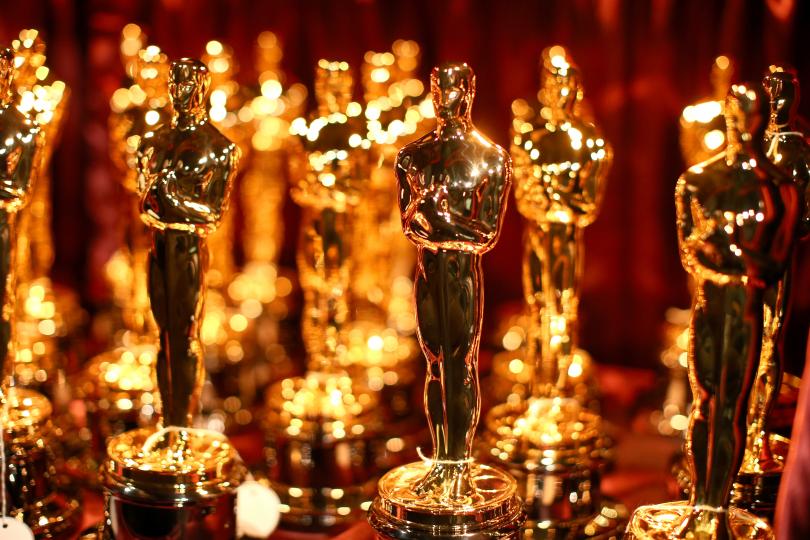
Academy Awards: The Annual Kvetch Fest


It's that time of year again where we parse the nominations. As you can see below, this was not a great year for American movies. The best picture nominees are a mixed bag, with some movies that don't belong in there by any stretch of the imagination (Arrival, I'm talking to you).
As usual, better independent movies are ignored in favor of big, corny spectacles.
I am not doing the technical categories or shorts because in many cases I have not seen the films.
Below, my rants and raves. Predicted winners in red. Who I think should win, in blue.

BEST PICTURE

I seem to be the only person in the world who absolutely adored Jackie. In my view, it is better than any of the films below. La La Land, the probable winner, is very polarizing, but I think that even though it strikes people as conventional, it is the most audacious movie of the bunch. In contrast, Moonlight, which has been hailed as audacious because of its subject matter, seemed to me utterly trite. The fight is between those two.

ARRIVAL - The most boring movie about aliens ever made.
FENCES - Good, but it's a stiffly filmed stage play, not Best Picture material.
HACKSAW RIDGE - I have trouble seeing movies by antisemites.
HELL OR HIGH WATER - Preposterous but entertaining modern Western.
HIDDEN FIGURES - Conventional but effective and winning.
LA LA LAND - For sheer moxie and audaciousness. A love letter to long-suffering artists.
LION - I hear it's a five-hankie weepie. I just can't stand Dev Patel.
MANCHESTER BY THE SEA - There is nothing wrong with this movie, but it leaves me cold.
MOONLIGHT - Vastly overrated. 

SNUBBED: Jackie, Loving, Elle, Captain Fantastic, Hail, Caesar! Indignation.

ACTOR IN A LEADING ROLE
CASEY AFFLECK. An effective one-note performance.
Manchester by the Sea
ANDREW GARFIELD. Haven't seen it. But I've never understood why directors like him.
Hacksaw Ridge
RYAN GOSLING. He is wonderful.
La La Land
VIGGO MORTENSEN So glad he's here. A subtle and committed performance.
Captain Fantastic
DENZEL WASHINGTON. He's great.
Fences

ACTOR IN A SUPPORTING ROLE
MAHERSHALA ALI. I love him in everything, but I don't get why he is here.
Moonlight
JEFF BRIDGES. He's fantastic.
Hell or High Water
LUCAS HEDGES. I hated him, but maybe that was his job.
Manchester by the Sea
DEV PATEL
Lion
MICHAEL SHANNON. Absolutely righteous nomination. The best of the bunch.
Nocturnal Animals

SNUBBED: 
Tracy Letts in Indignation
Ralph Fiennes in Hail, Caesar! or A Bigger Splash. 
Simon Helberg and Hugh Grant in Florence Foster Jenkins. 

ACTRESS IN A LEADING ROLE
ISABELLE HUPPERT. Killer, as usual.
Elle
RUTH NEGGA. Wonderful.
Loving
NATALIE PORTMAN. Frighteningly good.
Jackie
EMMA STONE. Excellent.
La La Land
MERYL STREEP.  Sure, but enough already!
Florence Foster Jenkins

SNUBBED: Annette Bening (20th Century Women), Amy Adams (Arrival)

ACTRESS IN A SUPPORTING ROLE  A lackluster category this year.
VIOLA DAVIS. She's fine. I have an issue with the snot.
Fences
NAOMIE HARRIS. She was fine, considering the cliched role.
Moonlight
NICOLE KIDMAN. Didn't see it.
Lion
OCTAVIA SPENCER. She was good, but no better than her colleagues.
Hidden Figures
MICHELLE WILLIAMS. Fine.
Manchester by the Sea

SNUBBED: Taraji P. Henson (Hidden Figures), Linda Emond, Indignation.

ANIMATED FEATURE FILM - I haven't seen any of these films but I'm judging from the trailers.
KUBO AND THE TWO STRINGS
MOANA
MY LIFE AS A ZUCCHINI
THE RED TURTLE
ZOOTOPIA

CINEMATOGRAPHY
ARRIVAL
Bradford Young
LA LA LAND
Linus Sandgren
LION
Greig Fraser
MOONLIGHT
James Laxton

SILENCE
Rodrigo Prieto

SNUBBED: JACKIE, Stephane Fontaine
                     HAIL CAESAR!, Roger Deakins
                     THE HANDMAIDEN Chung-hoon Chung

COSTUME DESIGN
ALLIED
Joanna Johnston
FANTASTIC BEASTS AND WHERE TO FIND THEM
Colleen Atwood
FLORENCE FOSTER JENKINS
Consolata Boyle
JACKIE
Madeline Fontaine

LA LA LAND
Mary Zophres

SNUBBED: Zophres for Hail, Caesar! 

DIRECTING
ARRIVAL - Humorless, leaden: no.
Denis Villeneuve
HACKSAW RIDGE
Mel Gibson
LA LA LAND 
Damien Chazelle
MANCHESTER BY THE SEA - Good job.
Kenneth Lonergan
MOONLIGHT - Fine.
Barry Jenkins

SNUBBED: Paul Verhoeven, Elle. Pablo Larrain, Jackie. 

DOCUMENTARY (FEATURE)
FIRE AT SEA - Haven't seen it.
Gianfranco Rosi and Donatella Palermo
I AM NOT YOUR NEGRO - So glad this is here. Excellent. 
Raoul Peck, Rémi Grellety and Hébert Peck
LIFE, ANIMATED - Haven't seen it.
Roger Ross Williams and Julie Goldman
O.J.: MADE IN AMERICA - One of the best movies of the year. Period. 
Ezra Edelman and Caroline Waterlow
13TH - Excellent.
Ava DuVernay, Spencer Averick and Howard Barish


FOREIGN LANGUAGE FILM
LAND OF MINE
Denmark
A MAN CALLED OVE
Sweden
THE SALESMAN - Farhadi is one of the best filmmakers in the world today so I root for him.
Iran
TANNA
Australia
TONI ERDMANN - Super overrated.
Germany

SNUBBED: THE HANDMAIDEN. One of the best movies of the year in any language. 
THE CLUB by Pablo Larrain, Chile. 

MUSIC (ORIGINAL SCORE)
JACKIE - If this hadn't been nominated I would have thrown a symphonic tantrum. Spectacular.
Mica Levi
LA LA LAND - Not memorable music, but a lot of it.
Justin Hurwitz
LION
Dustin O'Halloran and Hauschka
MOONLIGHT - Distracting and pretentious.
Nicholas Britell
PASSENGERS
Thomas Newman

SNUBBED: Nocturnal Animals. 

MUSIC (ORIGINAL SONG)
AUDITION (THE FOOLS WHO DREAM)
from La La Land; Music by Justin Hurwitz; Lyric by Benj Pasek and Justin Paul
CAN'T STOP THE FEELING
from Trolls; Music and Lyric by Justin Timberlake, Max Martin and Karl Johan Schuster
CITY OF STARS
from La La Land; Music by Justin Hurwitz; Lyric by Benj Pasek and Justin Paul
THE EMPTY CHAIR
from Jim: The James Foley Story; Music and Lyric by J. Ralph and Sting
HOW FAR I'LL GO
from Moana; Music and Lyric by Lin-Manuel Miranda

SNUBBED: Pharrell Williams' excellent songs for Hidden Figures. 

PRODUCTION DESIGN
ARRIVAL - The only good thing in this film, plus Amy Adams.
FANTASTIC BEASTS AND WHERE TO FIND THEM
HAIL, CAESAR! Love, love, love. 
LA LA LAND - Technicolor without the style.
PASSENGERS

WRITING (ADAPTED SCREENPLAY)
ARRIVAL
Eric Heisserer
FENCES
August Wilson
HIDDEN FIGURES
Allison Schroeder and Theodore Melfi
LION
Luke Davies
MOONLIGHT
Screenplay by Barry Jenkins; Story by Tarell Alvin McCraney

SNUBBED: Elle by Philippe Djian. Indignation by James Schamus.

WRITING (ORIGINAL SCREENPLAY)
HELL OR HIGH WATER - Entertaining but I didn't buy it.
Taylor Sheridan
LA LA LAND - Bittersweet and smart. 
Damien Chazelle
THE LOBSTER  Their weakest script yet.
Yorgos Lanthimos, Efthimis Filippou
MANCHESTER BY THE SEA - Very good writing.
Kenneth Lonergan
20TH CENTURY WOMEN - Good.
Mike Mills

SNUBBED: Noah Oppenheim, Jackie. 

Dec 29, 2016

O.J: Made In America


I saw this epic documentary by Ezra Edelman on a big screen at one seating, 11 am to 7 pm, and it took my breath away. It has the scope of a Shakespearean tragedy and the feel of a spiraling, prismatic nightmare. It is crammed with information and raises a thousand questions for every answer it seeks to shed light on. It has a colorful, entertaining and deeply revelatory cast of characters, from best friends, managers, former attorneys, jury members, prosecutors, police officers, and a particularly fabulous helicopter pilot. Some of them, like Marcia Clark, O.J.'s manager, and Mark Fuhrman leave you wanting answers. It is an absolutely riveting and thoroughly depressing film: eight hours of much that is wrong with this country through the rise and fall of Orenthal James Simpson.

You may remember the murders, the white Bronco and the trial and the surreal circus we witnessed for 8 months in the mid-nineties. This movie puts it all into context. From Simpson's street smart childhood in the San Francisco projects to his astounding feats as a college football hero and adored celebrity, to his ignominious fall, the portrait that emerges is the exact opposite of a hero.
This country has an unhealthy obsession with heroes and it slaps the term on all kinds of undeserving people quite lightly. This tends to happen particularly in sports. I have never fathomed why people think that someone as evidently rank as Michael Phelps is a hero. Look what happened to Lance Armstrong, who abused the privilege. And then there is O.J. Simpson, who took his own glorification to new highs and lows.
He was extremely good looking, a gifted athlete, and according to many people in the film, an irresistible charmer. He had an amazing rags-to-riches story and all the talent, fame, money and public adoration someone could possibly wish for. But soon a jarring note is introduced. The young college football player refused to participate in the Civil Rights movement when Mohammed Ali was gathering the biggest black athletes in America to join in the protest, a decision that cost many of them dearly. We learn through the course of the film that Simpson's indifference, which you could ascribe to youthful ambition was only one manifestation of a deeply narcissistic, manipulative personality. The personality that emerges is that of a coward and an egomaniac with deep reserves of unfathomable anger: driven, controlling, manipulative, paranoid and deeply self-hating, to the point that he did not consider himself Black. His tragedy is that his undeniable talent and consequent celebrity amplified an already damaged ego.
Hand in hand with the exploration into Simpson's personality, Edelman weaves a compelling look into the country he was born into; a country that still refuses to fully acknowledge and heal the disastrous and ongoing ramifications of slavery and racism.
The Los Angeles where O.J. moved after he retired from playing for Buffalo was a sunny haven for people with money but a hell of a segregated town with a police department that was notoriously abusive of the Black community. By the time his saga happened, L.A. had witnessed the Rodney King beating and story after story of police brutality against African-Americans.
Hindsight is truly 20-20. At the time of the trial, I made a $100 bet that O.J. would be found guilty. The evidence, after all, was overwhelming. Perhaps I was too new to the U.S. and was unaware of the enormous gulf between blacks and whites and the racial tensions bubbling under the surface. After watching this film, the competing black and white perspectives are clearly laid bare. The insurmountable differences in the perception of Simpson: to white people, a cold-blooded liar and murderer; to the black community, just another black man framed by racist police, dramatically divided the country thanks to years of mutual distrust and prejudice and to blatant manipulation by the defense and the prosecution alike. Any white person who does not understand how the not-guilty verdict was arrived at will have a much clearer understanding.

This movie covers many layers of the American experience. The first one, which I had forgotten about and which shocked me, and perhaps the only one which is truly universal, is domestic violence. Nicole Brown would routinely call 911 from the couple's home in Brentwood fearing for her life. Quite simply, she was a battered wife. Celebrity or not, her case is yet another statistic of spousal abuse that ends in murder, when victims don't leave and abusers are not arrested and locked up. Poor Ronald Goldman, a waiter who came by to deliver a pair of glasses, was caught in the maniacal rage of a wife beater. The documentary shows the gruesome pictures of the crime scene that were left out of the newscasts and the newspapers at the time. They are so extreme, they were not fit to be seen by the public at large.

The heady, highly toxic and very American cocktail of money and celebrity allows people to get away with murder; in this case, literally. Because Simpson was a celebrity (which turned him virtually into a demigod) and lived in a tony white neighborhood, a policeman shows up after one of Nicole's frightened calls and finds her hiding in the bushes, bruised and scared out of her wits, but instead of cuffing O.J. and putting him in the car, he lets him get dressed, and next thing he knows, O.J. is escaping in his Bentley. Then, as she did time and again, she declines to press charges. It could be out of love, codependency, fear, the fact that he was a meal ticket for her entire family, or possibly all of the above. Certainly his money and status played a part.
The two almost comically incompetent detectives that arrested Simpson after the chase make every effort to allow him to acquit himself in their interrogation. Hell, consider that surreal chase in which a squad of patrol cars basically accompanies him as if at a procession. Edelman shows aerial footage of what happens to any regular idiot who uses his car to flee the long arm of the LAPD. They don't get a parade like O.J. They get totaled.
I don't have to tell you about the distortion of reality that this insane American cult of cash and celebrity brings: we are about to inaugurate a demented orange baboon as President of the United States because of money and fame. In fact, the parallels with Trump are inevitable. In both cases, there are reams of incontrovertible evidence as to the toxicity of both celebrities' characters. They are both pathologically narcissistic.

When it comes to the trial itself, and the justice system that allowed such an unseemly spectacle is where you tear out your hair in despair. Justice for all... that $50,000 a day in lawyer fees can buy. An incompetent and self-serving District Attorney and a beleaguered prosecution team which in hindsight made terrible, but almost inevitable, tactical mistakes, all due to the racial makeup of the story, including the location of the jury trial, the jury selection and the choice of judge, among many others. As the trial laid bare at the time, the American justice system is designed to work only for those who can afford it.

Which brings us back to the "race card". It is a disgrace, but a fact and at the core of this story, that this is how Simpson's legal fate was going to be played out. The most exquisite and painful irony is that, until he became a murderer, O.J. Simpson wanted nothing to do with black people. Except for his childhood friends, all his friends were white. He had always been out for himself; never had a shred of conscience, racial or otherwise. But the minute it was time to elicit sympathy, he suddenly found his roots. He had people like Johnny Cochran fashion a racial narrative for him, complete with a racist cop supposedly planting evidence. Yet Simpson and his Dream Team were not alone in making it about race. The prosecution made it about race when it changed the location of the trial, when it introduced Christopher Darden, and when it chose eight black women as jurors. According to Marcia Clark, it turned out that they had no sympathy for Nicole Brown: the white interloper wife of a Black man.
Race is the poison that feeds this terrible story from inception, and Edelman is not shy to explore its worst aspects - Simpson as the unthreatening negro, the Uncle Tom-ish Hertz spokesman, the guy who had to get the white woman, who wondered what were "all those niggers" doing in his neighborhood, welcoming him home after the chase. Charitably, his loyal friends insist that all he wanted was to transcend race. He had a point, to a point. He wanted to be equal, in his own selfish way. However, his behavior was far from an appeal to equality and brotherly love. He was indifferent to his community and became a sad minstrel sideshow for the mainstream media. He lacked what true heroes have: dignity.


Dec 28, 2016

2016: The Year In Movies. Best, Worst and Everything in Between


Perhaps not as horribilis as it was in real life, but 2016 was a crap year in movies, for the most part.
Still:

Excellent
The Handmaiden
O.J. Made In America
Jackie
The Club
Elle
Hail Caesar!
I Am Not Your Negro
13th
The Wailing

Very Good
The Witch
A Bigger Splash
The Clan
Krisha
Indignation
Southwest of Salem
La La Land
Neruda
Mustang
The Witness: Kitty Genovese
Aquarius
The Mermaid

Good
Manchester By The Sea
20th Century Women
Hidden Figures
In The Heart Of The Sea
Dheepan
Julieta
Captain Fantastic
Love and Friendship
The Conjuring 2
Christine
Fences
Equity
Loving
Things To Come

Absolutely Bizarre
Evolution

Okay
Café Society
Maggie's Plan 
Don't Think Twice
Weiner
Live By Night

Interesting But Flawed
Miles Ahead
The Invitation
Miss Sloane
The Fits

Overrated
Moonlight
Toni Erdmann
Arrival
Hell or High Water

Meh
Florence Foster Jenkins
The Family Fang

Disappointing
Nocturnal Animals
Green Room
The Lobster
Creepy
Don't Breathe

Bad
American Pastoral
A Tale Of Love And Darkness

Pretentious and Bad 
Knight of Cups
The Neon Demon
Heart of a Dog

Horrid
Silence

Haven't Seen Yet:
I, Daniel Blake
Paterson
Sully

You'd Have To Pay Me To See:
Rogue One
Allied
Hacksaw Ridge
Collateral Beauty
Lion


Sep 19, 2016

Southwest Of Salem


Here's an article I wrote for Fusion.net on this excellent documentary about four Latinas from San Antonio, Texas who were falsely accused of sexually abusing children. The film is playing at Cinema Village in New York.

Dec 28, 2015

Where To Invade Next


Yes, he can be obvious and a tad overbearing, but Michael Moore returns to form in his latest passionate outburst of unabashed liberalism. The concept is a bit cheesy: he goes to "invade" different countries in Europe and take with him their best social policy ideas to bring back home. Sounds like hard medicine to swallow for even the most hemorrhaging hearts, but Moore actually creates a bitterly hilarious film as he explores other industrialized countries, less powerful than ours, where people live better and common sense still reigns.
Like him or not, he has mastered the form of the satirical documentary. This film is among his funniest. I can't really go into details so as not to spoil the laughs for you, but he talks to people in Italy about paid vacation, France about school lunches, Slovenia about college debt, Norway about their prison system, and Iceland about how they dealt with their financial collapse. He milks the comparisons with the American way of doing things for laughs. It works. Compared to Europe, we look like a brutish, callous culture. It's very funny if it weren't so tragic.
As usual, he omits the problems in Europe that don't suit his crusading spirit, and is not interested in engaging in debate. His willful naiveté can be annoying, but by showing us the existence and possibility of a better system, he bares the cruel and sad dysfunction of our predatory brand of capitalism. His passionate outrage gives strength to his premise. Laughter is plentiful but it hurts, as well it should. We have become an absurd country.


Jul 13, 2015

Amy


This documentary by Asif Kapadia (Senna) chronicles the meteoric rise and tragic fall of singer Amy Winehouse, who was all of 27 years old when she was found dead of alcohol poisoning, her body ravaged by the effects of bulimia and substance abuse. Kapadia uses only existing footage taken by either those close to Amy, or the media. We only hear the voices of those close to her, we never see them. At times in the movie I missed their faces, because we can read faces better than just voices. Still, this allows Kapadia to portray Amy's life without interruption, as it was briefly lived.  
That she was a unique and major talent is clear from the opening images of a chubby pre-teen, authoritatively belting out "Happy Birthday" in a home video, with the chops of a much more mature singer. That she and her working class family were ill-equipped to deal with fame is also abundantly clear. This too-long film condenses well the brutal cycle of adoration and rejection of a fickle public and a ravenous media.  There is nothing both love more than a success story, unless it's a success story that implodes as nastily and spectacularly as possible. This they seem to love with the cruelest glee. And this, Amy Winehouse gave them in spades.
The movie shows how most of the songs she wrote were transparently autobiographical, including Rehab, her monster hit, and Love is a Losing Game. It shows her at her best, and then, rather relentlessly, at her worst. And the same goes for the audience and the media: they adore her, then they jeer her mercilessly when she's down, finally shedding tears for her untimely death.
As is common in these kinds of stories (see: Kurt Cobain: Montage of Heck. See also, Jackson, Michael), toxic people (her husband Blake Fielder) glommed on to her and were instrumental in her unraveling.  It's easy to assign blame: a money-struck father, an ineffectual mother, a junkie leech of a husband, managers who saw the dollar signs at the expense of her health. But what about her own responsibility? Amy Winehouse looked and behaved like a tough cookie, but she wasn't. She was sensitive and vulnerable. She easily fell prey to bad influences and desperately needed someone to impose clear boundaries. However, there is an amazing scene in which she shows that she had enormous willpower, even if she used it mainly to self-destroy. She comes onstage in Belgrade, completely wasted, in front of thousands of adoring fans, and simply refuses to sing. Other performers tend to claim "exhaustion" or a sore throat, and cancel. Not her. She could clean up when she wanted to, and dive into mayhem just as well.
According to her own mother, Amy Winehouse was too big a personality to control, even when she was a child. But although she grew up in a house rattled by divorce, she was surrounded by a tight-knit circle of loving family and friends, some of whose members, like her first manager and her childhood friends, always had her best interests at heart. Not so her dad, Mitch, whose infidelities the young Amy never really could get over, and who, as much as he loved her, seemed to care more for the money rolling in when what she needed was a strong hand to discipline and guide her. It must be unendurable to know that those whom you love most (dad, husband) are exploiting you.
Like a trans person trapped in a body that doesn't feel right, Amy identified as a jazz singer, not a pop star. She admired the great jazz vocalists and would have been happy to be one of them.  In today's world, that is not a financially winning proposition, and she didn't have the stubbornness or the clarity of purpose, perhaps, to guide her own career in that direction. For the music industry, she was too talented to be in a small niche. It is heartbreaking to see her reaction when none other than her idol, Tony Bennett, announces she has won the Grammy for best artist of the year. We see them recording the song Body and Soul together, and Amy is nervous and Bennett is sweet, patient and encouraging. Her loss breaks his heart and ours.


Mar 23, 2015

Going Clear: Scientology And The Prison Of Belief


You want sinister, hair-raising horror? This documentary on the criminal cult known as the Church of Scientology will give you plenty to outrage you and creep you out. Alex Gibney's film is an effective summary of the excellent, impeccably researched book by Lawrence Wright, but I strongly recommend the book for a more detailed chronicle about the origins and evolution of this sinister cult. It is an amazing read.
One thing is certain: the book may be superior to the movie, but the movie may be what finally brings this scam down. Images are powerful. Gibney got access to videos featuring Hubbard's increasingly deranged personality, and the creepy mass rallies organized by the current leader and creepmaster extraordinaire David Miscavige, productions overblown with game show tackiness and a not a small frisson of totalitarianism. Think Leni Riefenstahl in the Valley.
Currently out in theaters in limited release and on HBO on March 29, the documentary will gain far more exposure than the book and hopefully inflict more damage. It may encourage more disenchanted Scientologists to come forward and "go clear" on the abusive nature of the church. Perhaps the public outcry will finally force the government to remove this cult's tax-exempt religious designation. It's about time. In the meantime, the church is busy discrediting the disgruntled former members that appear in the film and pestering film critics to include their point of view in their reviews! This, if nothing else, shows how delusional they are.
I think the only smart thing L. Ron Hubbard, the founder of Scientology, ever said was that "if you want to get rich, you start a religion". His church, which is nothing but a spiritual Ponzi scheme, is there to prove it.  His bizarre faith, a mix of pulpy science fiction and psychoanalysis 101, is delivered in a process similar to an addictive internet game, a sort of Candy Crush Saga of the soul. People shell out money to acquire higher spiritual levels. By the time they get to know the crackpot tenets of their "religion", they are out of thousands of dollars and have spent years exposing their every secret in therapeutic sessions called audits. When they finally hear the cockamamie dogmas about Xenu and Thetans they may be in too deep, too ashamed of having been duped, to leave. It is a brilliant mind control scheme disguised as a spiritual path to make you a better person and the world a better place. The question that Wright says he wanted to answer remains elusive: what makes otherwise rational and intelligent people fall for such a scheme? In this case, it's beyond personal torment or an obsession with self-improvement. Scientology's ascending system of belief is designed to hook you, brainwash you, and relieve you of your money.
Another question that the documentary tries to answer, not very satisfactorily, is how do the former leaders of the church, once enforcers, now whistleblowers, feel about their own actions? Yes, they are brave to come out (considering the harassment coming at them from the church), but where is their sense of responsibility for the damage and pain they inflicted on others?  Gibney should have been harsher with these people. He lets them off easy.
As Gibney piles on outrageous examples of the church's abuses one wonders, how is this legal? The answer is simple: the U.S. government is afraid of Scientology. Last time it tried to collect the billion dollars the church owed in unpaid taxes, the I.R.S. received 2400 lawsuits, and it was infiltrated and harassed in what Wright calls the biggest spying operation ever perpetrated against the U.S. government (not even Russia or China come close). Since the church is so wealthy it can afford to litigate until the end of time, the IRS granted tax-exempt religious status to the church to get the lawsuits and harassment off its back. Meanwhile, the church has enriched itself enormously by the fees and contributions of its members, by its huge real estate holdings, and without paying a cent in taxes or a cent in labor.
If the cult has always been loony -- and one look at Hubbard should be enough to discourage anyone from believing anything coming out of his mouth -- after Hubbard's death, David Miscavige, an even more sinister man who was born into the faith, made his way to the top and has presided over the church in an increasingly paranoid and abusive fashion.
As for its two most famous acolytes, the documentary posits the theory that the reason John Travolta and Tom Cruise have not left or confronted its abuses, is because they are afraid of what the church could disclose against them as retaliation, since every audit consists of detailed notes on the members' most private issues. You do the math.
Although many people claim that Scientology has helped them, the church has been known to try to destroy the lives of anyone that dares oppose or criticize it. It has destroyed families, ruined, humiliated and intimidated former members. If their tactics were performed by anything not called a religion they would qualify as crimes. But the church shelters itself under the protection of the first amendment, and its tax-exempt status. The most outrageous fact that emerges from this interesting film is why this criminal cult, accused of human trafficking, abductions, physical abuse, among other things, is still legal in the US.
A great companion piece to this movie is P.T. Anderson's The Master. If you haven't seen it, see the documentary first. It sheds light on how much Anderson based his thinly fictionalized movie about the charismatic leader of a cult on Scientology. You will see that Philip Seymour Hoffman's incredible performance hews close to some aspects of Hubbard, although he comes across as much classier, charismatic and authoritative than that pudgy man.


Jan 15, 2015

The Oscars SUCK


They have always sucked but this year they suck more. This year, they are not even trying with the pretense of inclusion. They are going mostly for the safe, the well trod, the boring. Except for the actress nominations and some of the technical departments, it's an all male, mostly white dudes cast. I am the last person to clamor for affirmative action in art. But this is dispiriting. Because this year deserving women like Ava DuVernay and Gillian Flynn are shut out for no good reason. Safe, well-meaning biopics like The Imitation Game and The Theory of Everything replace better, more hard-hitting, but less palatable movies like Foxcatcher, A Most Violent Year, or even Gone Girl.  Yes, some original, independent-spirited movies like Boyhood, Whiplash, Selma and The Grand Budapest Hotel made it, but it is not enough. A cause for concern should be that Hollywood has to rely on indies or British films to fill up ten slots. A dismal year for American movies.

Below is the list of nominations.
The ones in bold are the noms I consider well deserved. And those who unfairly did not make it. In blue, my favorites.
In red, my predictions for your Oscar pool. The categories that have no red, I have no idea about. 
If you win the pool, you give me half, if you lose, which is far more likely, I'm not responsible.

Best Picture
Birdman - Fun, fantastic movie.
Boyhood - Yes, and should win.
The contest is between the navel-gazing ego fest of Birdman, Hollywood talking about itself, which the Academy loves, or the lack of ego and sustained excellence of Boyhood. It's a tough call, but if the Academy members are not utterly depraved, they should vote for Boyhood.
Selma - Yes, however grudgingly and ungenerously it made it to the list. It's being shut out of virtually everything else except that stupid song at the end, which nearly ruined the entire movie for me. This sole nomination feels more of a consolation prize than a deserved nod. Selma should have gotten nods at least for Best Actor (David Oyelowo), Best Director (Ava Du Vernay), Best Screenplay (there's a fight about who really wrote it), Score (by Jason Moran) and Costume Design. It seems that the Selma team completely mishandled their p.r.; the greatest irony being that DuVernay used to handle p.r. in Hollywood before she became a director. It's a damn shame because this is a good and important movie, at a time when more people need to remember this story.
The Theory of Everything - Yawn. It's a good movie but not a great one.
The Imitation Game - Yaaawn. Both are classic, safe choices for the retirement community. If we go for British biopics, Mr. Turner kicks their ass.
The Grand Budapest Hotel - lovely and surprising, and I'm happy it's here.
American Sniper - Haven't seen it, but Clint Eastwood is the most overrated person in the world.
Whiplash - Yes! A damn good film. Original. Bracing. Spectacular.
Foxcatcher could have been included, as well as Gone Girl. But they are too dark for these losers.

Actress in a Leading Role
Julianne Moore,  Still Alice - She is fantastic.
Felicity Jones, The Theory of Everything - She rocks in this movie.
Rosamund Pike, Gone Girl - she is very fine.
Reese Witherspoon, Wild -  She tries, but is totally lacking in depth.
Marion Cotillard, Two Days One Night - Freaking amazeballs. 
The contest here, I think, is between the illness du jour, as portrayed by Julianne Moore, and La Cotillard, who is a monster actress. Between Alzheimer's and the beleaguered working class of the world, I think they'll go for Alzheimer's. It hits closer to home.

Actor in a Leading Role
Michael Keaton, Birdman - He is very good, I love him dearly, but I think there are others more deserving.
Eddie Redmayne, The Theory of Everything - No doubt, he is awesome.
Benedict Cumberbatch, The Imitation Game - No doubt, he is wonderful. Also, he seems to have more fun than any other celebrity, so that's why I'm rooting for him. None of my favorites are in this race.
Steve Carell, Foxcatcher - Excellent.
Bradley Cooper, American Sniper -  I'm sure he's good. 
But where is David Oyelowo who so convincingly portrays Martin Luther King? Where is Ralph Fiennes, who is miraculous in The Grand Budapest Hotel? Miles Teller was brilliant in Whiplash, but he has been thoroughly ignored because he plays an asshole. Oscar Isaac in A Most Violent Year? Even Channing Tatum in Foxcatcher. I'm tired of actors not being recognized for subtle work.

Directing
Alejandro Gonzalez Inarritu,  Birdman - A tour de force.
Richard Linklater, Boyhood - A bigger, quieter tour de force.
Wes Anderson, The Grand Budapest Hotel - Absolutely.
Morten Tyldum, The Imitation Game - Pat, predictable, just decent. Instead, James Marsh of The Theory of Everything. 
Instead, Ava DuVernay for Selma. It is appalling that she is not in the running.
Bennett Miller, Foxcatcher - Well done. But instead, Damien Chazelle for Whiplash.

Actress in a Supporting Role
Patricia Arquette, Boyhood - If there is justice, this will happen.
Emma Stone, Birdman - She is wonderful in this film.
Keira Knightley, The Imitation Game - Very good but instead, Jessica Chastain in A Most Violent Year. 
Meryl Streep, Into the Woods - She is becoming the Queen of Good Hams. Let's just give her an award each year and call it a day.
Laura Dern, Wild - She is better than the entire movie.

Actor in a Supporting Role
J.K. Simmons, Whiplash - probably and deservedly the winner.
Edward Norton, Birdman - I LOVE him in this.
Ethan Hawke, Boyhood - Great but not as great as Arquette.
Mark Ruffalo, Foxcatcher - Great.
Robert Duvall, The Judge - Have not seen him, but he always kills.

Foreign Language Film
Ida - A wry, fantastic film about the aftermath of the Holocaust.
Leviathan - A wry, fantastic film about living with corruption in Russia.
Tangerines - Have not seen it.
Wild Tales - Have not seen it.
Timbuktu - This is a poetic, sweet, and surprisingly funny film about Islamic fundamentalists (!) 
I doubt that the members of the Academy actually watch the films so they may want to punish Putin, they may want to extend an olive branch to Muslims, or, and this has been known to happen, vote for the movie that has something to do with the Holocaust. They are all deserving. 
I can't believe Force Majeure is not in the running. Or Two Days, One Night. Or The Wonders.

Writing – Adapted Screenplay
Graham Moore, The Imitation Game -  Defanged, sentimental version of the life of Alan Turing. A travesty. 
Damien Chazelle, Whiplash. How is this an adapted screenplay?
Anthony McCarten, The Theory of Everything. He has a scene of applause in the end which I will never forgive.
Jason Hall, American Sniper
Paul Thomas Anderson, Inherent Vice - Gets brownie points for trying to adapt Pynchon. 
Where is Gillian Flynn's smart adaptation of Gone Girl? 

Writing – Original Screenplay
Richard Linklater, Boyhood 
Alejandro González Iñárritu, Nicolás Giacobone, Alexander Dinelaris and Armando Bo, Birdman. 
I think the script is the weakest link in this movie.
Wes Anderson and Hugo Guinness, The Grand Budapest Hotel - Lovely.
Dan Gilroy,  Nightcrawler - Creepily funny, but I don't buy the contrivances of this script.
E. Max Frye and Dan Futterman, Foxcatcher - A well written American nightmare. 
Selma should be in this category but it isn't because of an unfortunate conflict over writing credits. Too bad.

Cinematography
Emmanuel Lubezki, Birdman
Roger Deakins, Unbroken
Robert D. Yeoman, The Grand Budapest Hotel
Dick Pope, Mr. Turner
Lukasz Zal and Ryszard Lynzewski, Ida
All of them utterly deserving.

Music – Original Score
Hans Zimmer, Interstellar - Tries to make it sound like something exciting is happening.
Alexandre Desplat, The Imitation Game  - Desplat at his schmaltziest.
Johann Johannsson, The Theory of Everything - Nice score
Alexandre Desplat, The Grand Budapest Hotel - Why nominate him twice? This one is the keeper.
Gary Yershon, Mr. Turner
In general, I don't care. None of these scores (I have not seen Interstellar) made an impression. 
Jason Moran's score for Selma was lovely. The big band score for Whiplash too. Both should be here.

Makeup and Hairstyling
Foxcatcher
The Grand Budapest Hotel
Guardians of the Galaxy

WHATEVS

Costume Design
Colleen Atwood, Into the Woods -  I hated the drab, pedestrian costumes.
Anna B. Sheppard, Maleficent - I'm sure this rocks.
Milena Canonero, The Grand Budapest Hotel
Jacqueline Durran, Mr. Turner
Mark Bridges, Inherent Vice
Selma should be here.

Music – Original Song 
“Glory” by Common and John Legend, Selma 
“Lost Stars” by Gregg Alexander, Danielle Brisebois, Nick Lashley and Nick Southwood, Begin Again
“Everything Is Awesome” by Shawn Patterson, The LEGO Movie
“I’m Not Gonna Miss You,” by Glen Campbell, Glenn Campbell: I’ll Be Me
“Grateful,” by Dianne Warren, Beyond the Lights

Visual Effects
Interstellar
Dawn of the Planet of the Apes
Guardians of the Galaxy
Captain America: Winter Soldier
X-Men: Days of Future Past


Documentary Feature
“Citizenfour”
“Last Days in Vietnam”
“Virunga”
“The Salt of the Earth”
“Finding Vivian Maier”

Film Editing
Sandra Adair, Boyhood
Tom Cross, Whiplash
William Goldenberg, The Imitation Game
Joel Cox and Gary Roach, American Sniper
Barney Pilling, The Grand Budapest Hotel

Sound Editing
Interstellar
Unbroken
The Hobbit: The Battle of the Five Armies
American Sniper
Birdman


Sound Mixing
Interstellar
Whiplash
Unbroken
American Sniper
Birdman


Production Design
Into the Woods - No imagination.
The Grand Budapest Hotel
Interstellar
The Imitation Game - Meh
Mr. Turner

Short Film – Live Action
Boogaloo and Graham
Aya
Butterlamp
Parvenah
The Phone Call


Short Film – Animated
Feast
The Bigger Picture
A Single Life
The Dam Keeper
Me and My Moulton


Animated Feature Film
Big Hero 6
How to Train Your Dragon 2
The Boxtrolls
The Tale of the Princess Kaguya
Song of the Sea
Why is The LEGO Movie not here? Everyone loved it.

Dec 23, 2014

Best and Worst of 2014


I was a bit underwhelmed by movies this year. Somehow, I felt last year had more punch.
Here's my list.

Excellent
Timbuktu
Boyhood
Whiplash
Ida
Force Majeure
The Wonders
Leviathan
Two Days, One Night
Mr. Turner
The Grand Budapest Hotel
Foxcatcher
Selma
Mommy
The Babadook
Under The Skin
Obvious Child
Jodorowsky's Dune
The Unknown Known
Citizenfour
Bad Hair
The Passionate Thief  - A restoration of Mario Monicelli's classic

Very Good
Birdman
A Most Wanted Man
Locke
A Most Violent Year
Calvary
Yves Saint Laurent
Magic in the Moonlight
Venus In Fur

Good
Gone Girl
Big Eyes
The One I Love
The Two Faces Of January
Blue Ruin
Snowpiercer 
Listen Up, Phillip
Young And Beautiful
Frank
Top Five
The Trip To Italy
Eden
Pasolini
The Princess Of France
Clouds Of Sils Maria
Love Is Strange

Could Be Better
The Immigrant
The Imitation Game
The Theory of Everything
Inherent Vice
The Blue Room
Rosewater
Enemy
Into The Woods
Art and Craft
The Skeleton Twins
Beyond the Lights

Overrated
Dear White People
Guardians of the Galaxy
Saint Laurent
Nightcrawler
Only Lovers Left Alive

Morally Dubious
American Sniper

Pretentious
Jauja
Goodbye To Language

So Bad It's Good
Exodus: Gods and Kings

Bad
Interstellar
Wild
Time Out of Mind
A Master Builder
I Origins

So Bad It's Terrible
Noah

Despicable
Heaven Knows What 


Nov 25, 2014

Citizenfour


This is more than a documentary. It is history as it happens. Not a reenactment, but the "you are there" witnessing of the heroic whistleblowing of Edward Snowden, NSA contractor and teller of "national security" secrets. You heard right: heroic.
Director Laura Poitras, who has been harassed by the government every time she arrives on American soil for documenting our misadventures in the world, gets contacted by a mysterious source that claims that the NSA is spying on everybody. And by everybody, he means everybody.
Thanks to Snowden, we are now aware of the unconstitutional overreach of the Obama administration with the complicity of Congress and American telecommunication corporations, in the name of national security.
The NSA got access to the communication records (phone numbers, email addresses, credit card info, and the content thereof) of millions of Americans, from your friendly internet and phone providers like Verizon, AT&T, Google, Yahoo, etc.
Thanks to them, the NSA now knows that my dog had diarrhea this week, and that I search Google on how to successfully boil eggs, among other things. I feel like inundating Google with the most inane searches, just as an act of civil disobedience. We should crash their system with billions of gifs of Grumpy Cat. Who's with me?
When Glenn Greenwald, who was also contacted by Snowden and William Binney, another NSA whistleblower, testify in Brazil and Germany on how the US is not only spying on its own citizens within US borders (supposedly legally), but everywhere, including on Angela Merkel, completely illegally, you can see some guys blanching at the thought that Uncle Sam knows where they hide their porn stash.  This gives you an idea of the fear that such unimpeded, arbitrary surveillance may instill in the hearts of men and women.
It's very serious. The implications of such widespread metadata spying are chilling, if not utterly terrifying. Guilt by association, intimidation... Even if the government spins the story by assuring people that they don't look at the content of your daily messages, the idea that they are looking at the comings and goings of millions of regular citizens is appalling.
Why spy on all citizens?
The easy answer is BECAUSE THEY CAN. Because we have a ridiculous, unconstitutional law called the Patriot Act which gives them the unchecked power to do it. If allowed, people on positions of power are wont to abuse it (just look at Bill Cosby: eew). Given a blank check, they will take it to the farthest reaches possible. This is what the Fourth Amendment is for.
How is spying on everyone practical or useful or competent, I have no idea. I was always reassured by the thought that God himself could not possibly be prying on the peccadilloes of each and every one of us, and hence I felt that, whatever I did to anger him, he was statistically likely to miss it. With the NSA and their sophisticated tracking, not so much.
At some point in the movie, Poitras shows Obama's spokesman blithely saying that Americans don't mind this kind of thing because it reassures them in the war against terror. He should speak for himself, the cynical bastard. This fallacy that we can allow the government to trample our rights on the pretext of our own security is extremely scary. As Snowden and Greenwald point out, it is not a democracy and there is no freedom if you are being watched. The real terror of the war against terror is that now everyone, including law abiding citizens, is fair game. How does this blanket surveillance make us any different from wannabe totalitarian regimes like China, Russia, or Iran? It makes us worse, because of the blatant lying, the hypocrisy, the abuse of words like freedom and democracy in a country where these concepts have been completely eroded, trampled on, and mocked every day by the Obama Administration and the bunch of leeches who sit in Congress. It is repulsive.
Now, why would anyone want to be a whistleblower? It means introducing yourself voluntarily to a world of pain. Snowden is a smart, extremely articulate young man. If he has an oversized ego (like, say, Julian Assange), he doesn't look it. He really thinks people should know what is happening with their right to privacy. His conscience cannot allow him to rationalize the illegality and the abuse. He must speak out, at an enormous cost to his safety and freedom.
Smartly, he planned to give Poitras and Greenwald the documents first so that the government would not make it about him and his treachery. Once The Guardian (where Greenwald wrote) disclosed the information (and boy, did Snowden have access), then they decided to reveal it was him. He insisted on being identified. That is pretty courageous. I remember that the media tried to paint him as a spy, a traitor and an enemy. They want to try him under the Espionage Act of 1917, which does not make a distinction between a spy and a whistleblower, and which not unlike the Patriot Act, seeks to curtail our rights and freedoms under pretext of war.
Before watching the movie, which is very matter of fact, and not artificially dramatized - the revelations are heart stopping enough - I had the temerity to judge Snowden for accepting asylum in Russia, a place where they have been enthusiastically spying on everybody for centuries. But he does not have much of a choice. What government is going to want to piss off the US and its NSA by helping him? Snowden spent 40 days at the Moscow airport waiting for clearance from Putin. That alone should be punishment enough.
Snowden is courageous and what he did was important. I am not clear on what the consequences, if any, have been. He certainly unleashed a very necessary shit storm, but are they spying any less?
I hope he prevails. May he be safe and vindicated.
Meanwhile, the United States shows once more the kind of dishonest bully it is. I can't take the posturing anymore. Let's just accept that we actually live in a dictatorship of vested interests and enough with the charade.

Sep 22, 2014

Now Streaming: Koch


 An even-keeled documentary about the formidable Ed Koch, former mayor of New York City, Koch is a fun reminder of how gritty and borderline unlivable the city was in the 70s and 80s, before everything got gentrified and hipsterized and made into a theme park. Not that we miss the days of graffiti-covered subways, junkies, and garbage-strewn streets, but anyone who loves New York City and watches the footage of it burning with arson, riots, looting, and plain collapse, has to pine a little bit for its edgier days.
Into a metropolis on the verge of bankruptcy, came Edward Koch, a lifelong politician—and lover of attention—who ended up being, for better or worse, one of the most charismatic leaders, and a three-time mayor of New York City. A closeted gay man, fiercely defensive of his own closet, Koch was attacked by gay groups for not doing enough at the time of the AIDS crisis.
While he was perceived as being indifferent to gay issues because of his own gay issues, he nevertheless passed gay anti-discrimination legislation at a time when Harvey Milk and Mayor Moscone of San Francisco got killed for attempting to do the same. Yet this was a man who, in the '70s, faked a relationship with a former beauty queen in order to win his first mayoral race against Mario Cuomo (“Vote for Cuomo, not the homo,” went the slogans, which are included in the doc). In short, Koch is a film about a brilliant, larger than life, complicated gay man. 
Like all world class narcissists, Koch’s hubris seems to be his lack of empathy (not as bad as Rudolph Giuliani’s, but close), be it with the black community on the closing of a hospital in Harlem, or his unsympathetic response to the murder of a black man at the hands of white youths in Brooklyn; or his lack of compassion, whether real or perceived, at the time of the AIDS crisis in the '80s. In retrospect, perhaps a few words of solace or support for these communities would have garnered him respect and loyalty. But as first-time director Neil Barsky shows through archival footage and other talking heads, Koch didn’t have it in him. He liked to rule and to antagonize, with bluntness, charm and chutzpah.
Still, Ed Koch is responsible for urban projects of enormous consequence, like the redevelopment of Times Square from a squalid, crime-ridden porn hub to the tacky, but somehow awesome tourist trap it is today. As Barsky shows, Koch saved New York from bankruptcy by adopting draconian measures, allowed a mass transit strike to go on for 11 days, showing the unruly city that he meant business, and left an enduring legacy of public housing which turned around hellish neighborhoods and contributed to the improvement of living conditions for many poor people in New York. Yet he had such an outsized personality, and was so diplomatically challenged, that he also fomented great racial and political tensions.
Koch was  an attention seeker, not a conciliator. He buttered nobody up. Early in his career, he got in bed with corrupt political bosses whose graft came back to haunt him, ending his one of a kind, brilliant career as mayor. With unfettered access to Koch, Barsky, a former reporter for the Wall Street Journal, still manages to present a nuanced, complex and entertaining portrait of one of the most colorful characters in New York City history. Just to hear the real “Noo Yawk” accents of the distinguished talking heads in this film is a source of joy. Koch is a fascinating glimpse, not only of the man, but of the decades when he ruled New York, changing it forever, mostly for better.  
Koch airs tonight at 10 pm on PBS and is now streaming here.
Originally published on Out Magazine on 1.31.2013.

Apr 10, 2014

The Unknown Known

 
"soph·ist·ry ˈsäfəstrē/ 
noun: sophistry 
1. The use of fallacious arguments, esp. with the intention of deceiving."

If you are ready to spend 105 minutes in the exclusive company of Donald Rumsfeld, twice Secretary of Defense, as interviewed by Errol Morris, you will be treated to a crash course on self-delusion and verbal acrobatics. The picture that emerges is more damning than it seems. It doesn't look like Morris lobs harsh questions at his undeniably charming subject, but through subtlety and ironic contrast, the portrait that emerges is that of a man who thinks he's smarter than the rest of us, unrepentant, and deeply engaged with his own sophistry and self-mythologizing. 
The greatest "unknown" is why he lends himself to the scrutiny of Morris, someone he must know harbors no sympathy for his disastrous, warmongering shenanigans. Rumsfeld skirts the answer to this question. He thinks this is all a game of verbal and logical one-upmanship with a worthy opponent. Well, he did not fool me one bit.
Do not expect someone with the heroic-tragic stature of a Robert McNamara. Do not expect regret of any kind. We are dealing here with a man in love with the sound of his own mellifluous, Midwestern voice, and even more in love with having grasped power and taken it for a spin, consequences be damned. 
It is fascinating to watch him today, utterly composed, charming and relaxed and then see contradictory footage of his press briefings at the height of the war: arrogant, condescending, clearly relishing his power over the fawning press corps, to which he bequeathed famously blasé pronouncements like "stuff happens", when asked why nobody thought to prevent the looting of archaeological treasures in Iraq.  This is the subtle way by which Morris attempts to balance Rumsfeld's happy go lucky view of his own history. It's not a pretty sight.
Rumsfeld is a charmer. He has a wonderful voice, made for documentaries about life in the prairie. He acquiesces to read to camera a few of his hundreds of thousands, if not millions, of "snowflakes"; memos he wrote from the beginning of his long ascent into the pinnacle of power. Why did he put everything in writing? Was he thinking to leave a record of heroic public service behind? That he allows himself to read some damning memos only means he is hiding under this supposed transparency. He sleeps well at night. His conscience is untroubled.
I didn't know about his past career, and how he ascended to power by legendary Machiavellian maneuvers in the Ford administration, where he made enemies with Bush pére. Maybe that is the reason he ended wielding such enormous power at the cabinet of the fils, who seems to have done all the damage he did just to show up his daddy. The case against Iraq was merely a father-son Bush squabble that Rumsfeld and Cheney enabled. I didn't know that when he worked for Nixon, little Dick Cheney (aka Satan) was Rumsfeld's assistant. Rumsfeld's body language when he mentions this is priceless. He pats his hand in the air as if he was condescending to a little child. Much later, it was Cheney who recommended him to George W. Bush as Secretary of Defense. All this back story just adds to the creeping realization that we think we live in a democracy, but we actually live in a fiefdom of dynastic power and the same white, mostly male people rotating positions at the top for eternity.
Ironically, for a verbal fencer, or perhaps because of it, Rumsfeld is obsessed with definitions. He insists on the definition of every word. What is the definition of torture, he demands. Well, different people have different definitions. He and Dick Cheney decided that what they were doing to prisoners in Guantanamo was not torture, or that the Geneva Convention did not apply to them. 
He paints himself like a hero when he resigned after the pictures of Abu Ghraib came to light. I'm not buying it. That resignation had little to do with ethics and more to do with shrewd self-preservation. Bush did not accept his resignation. So he continued. It was much later that eight retired generals had had enough of his incompetence and finally mutinied.  
His legacy is the most abject decline of moral values in the handling of war in the history of this country, not to mention two failed wars and needless human suffering. But he freely roams the Earth, charming as the snake in Eden.
Unrepentant, the only tears he sheds happen as he recalls a hospital visit to a critically injured American soldier, which he turns into a happy ending. That soldier in particular rallied and survived, despite all odds: a quintessentially American narrative. But what about the tens of thousands of dead, injured, permanently damaged, overextended and abused American soldiers, plus hundreds of thousands of Iraqi citizens who didn't? Because of people like Rumsfeld, this has become a quintessentially American narrative as well. This is a fantastic, if maddening documentary. 

Mar 30, 2014

Jodorowsky's Dune


This illuminating and entertaining documentary by Frank Pavich centers on the ambitious adaptation of Frank Herbert's Dune that enfant terrible Alejandro Jodorowsky got close to making but never got off the ground. It is required viewing for anyone who dreams of making a movie, because it is at once tremendously inspiring and heartbreaking. It encompasses the passion, the collaboration, the singular madness, the universal dream that movies are, and the pitfalls of getting them made. In fact, it should be seen by anyone who is working on an artistic project. Jodorowsky has very astute insights on the creative process.
Since we are talking about Jodorowsky and not any run of the mill director, this movie is also about a seemingly insane charismatic leader marshaling forces to create what in his vision was to be the most important movie ever made.
Jodorowsky's deeply idiosyncratic and provocative films became successful in the 70s (El Topo, The Holy Mountain) and he was suddenly in the position to get French financing to make a movie. He chose Dune, which he had not even read yet (a friend told him it was cool). He set out to look for spiritual warriors, as he called them, since he wanted this movie to be a spiritual breakthrough, to give people an LSD trip without the drugs, to open minds. It was to be a movie that would change human consciousness (hey, these were the 70s). 
So he went on his quest to find the perfect team and he assembled a formidable and in some cases, borderline ridiculous group of talents, among them the great artists Moebius and H. R. Giger, who did spectacular designs. For the role of Emperor of the Universe no one but Salvador Dalí would do (makes perfect sense), and for an enormous malevolent character, he thought of Orson Welles, who had ballooned to gigantic proportions. Mick Jagger was to play a part. Some of the music was going to be by Pink Floyd. You don't get the picture.
Jodorowsky, who is more in touch with the symbolic, archetypal, metaphoric, spiritual world than most people, had his own intuitive way of finding good collaborators. By all accounts, he was an impassioned motivator who gave great freedom to his artists. Not a dictator, but a madman with a vision.He storyboarded the entire film with over 3000 frames, mostly by Moebius, and put it all together in a book thicker than the Yellow Pages. Apparently, there are only two copies in the world today. Pavich has animated some of the storyboard sequences and the frames are so dynamic and gorgeous that I would be happy to watch the entire thing this way.
Jodorowsky seems to have been an immensely charming and charismatic cajoler. To get his way, he promised burning giraffes to Dalí (a total diva) and, to a reluctant Welles, the chef of a Parisian five-star restaurant for location catering. But he also had an enormous ego. It is worth pondering the psychological ramifications of casting his own 12 year-old son as a Messiah figure and putting him through a merciless immersion in martial arts training to prepare him for the role. He took enormous liberties with the original story, emphasizing, not surprisingly, a character with an ego so huge, he lives in a palace shaped like himself.
It is folly, but it is organized, crafted and magnificently imagined: transformed into art. Even better, it seems eminently doable. Three fourths of the movie are devoted to Jodorowsky's creative and casting process, and he is a very entertaining raconteur. But at some point one thinks: whence the money?
And here lies the heartbreak. Unfortunately, to make cinematic dreams, you need money, or as Jodorowsky calls it, "this shit". In those days, the only place to go for help was Hollywood. So he and his producer Michel Seydoux pitched it at every major studio. The studios all loved that amazing book; they even thought that the $15 million budget (about $80 million today) was not unreasonable, but none would make it. They wanted it, but without Jodorowsky. They didn't trust him not to go over budget, and as Nicholas Winding Refn intimates in the film, they were afraid of his expanding mind. They knew they could not control him. He was the wrong dog barking at the only tree. Jodorowsky says, "it's my dream and you don't change my dream". And the studios would say, "Well, it's my money, so I can change your dream": History Of The Movies, in a nutshell. You can still feel Jodorowsky's ferocious anger at this epic frustration.
Dune never got made. Well, it got made by David Lynch, or as Jodorowsky generously puts it, by a De Laurentiis producer, into the clumsy movie fit for Mystery Science Theater 3000 that we know today.  One can imagine the producers barking on the phone a la Sam Goldwyn, "get me the American Jodorowsky", and that's how you arrive at David Lynch.
However, there is a coda that took my breath away and which I won't disclose here, but let's say that two of the artists who collaborated on the better Dune went on to create one of the best Sci-Fi movies of all time. Which is a surprising and deeply restorative insight into what may come out of devastating creative frustration. It is obvious that Jodorowsky's Dune made the rounds in the studios and it influenced, whether consciously or not, every subsequent Sci-Fi movie ever made, including Star Wars, which is like a really dumbed down version (and a movie I detest).
Jodorowsky's Dune is an admiring film and it lets you feel in the blanks for some unexplored spaces. If the adults were utterly devastated by the demise of the movie, how did Jodorowsky's teenage son deal with it? What were the consequences to their relationship? An end title reads that Jodorowsky and Seydoux parted ways, one imagines in catastrophic bitterness. The movie doesn't elaborate except to cheer us up by mentioning that they are collaborating again 35 years later.
This could easily have been a cynical movie, but it is a celebration of creative ambition. Jodorowsky's Dune is not only about the clash between dreams, the concrete shape they take as movies and the financial constraints that hamper their creation, but it is about how art, images and movies influence us at the deepest subconscious level and they suffuse far more of our lives, as creators or spectators, than we can ever fathom.


Aug 12, 2013

Lovelace


Amanda Seyfried acts her heart out in this unconvincing, uninspired movie about Linda Lovelace, the star of Deep Throat, the most successful porn movie ever. Even though the film has a great cast, led by Seyfried and a spectacularly creepy Peter Sarsgaard, this woman remains a blank. And it is not Seyfried's fault. The movie, directed by Rob Epstein and Jeffrey Friedman, and written by Andy Bellin, starts buoyantly enough as Lovelace meets Chuck Traynor, a sleazebag you can spot 10 miles away. She's 21 but lives cloistered with her strict parents, (Sharon Stone, good in a distracting wig, and Robert Patrick, excellent) and seems to be a virginal little angel. At first all is great fun as Traynor seduces her with promises of stardom. Even her parents are impressed with him, although you want to take a shower just from looking in his direction. He teaches her the notorious ropes that gained her instant fame: Deep Throat, for those of you who don't know, is about a woman whose clitoris is in the back of her larynx.
The problem is in the writing. The movie tells us a lot of stuff, but it doesn't show it, so Linda's character remains hermetic. It is hard to understand what she saw in the sleazy Traynor and why she stayed with him through his abuse: she may have the textbook signs of abused women in general, but as a dramatic character she has little agency. Except for her choice to move in with this creep, she does not propel the story; everything happens to her. Hence she remains, despite Seyfried's excellent efforts, an inscrutable blank.
I enjoyed the first part of the movie, a fun sidetrip through roller skating rinks and bonfires on the beach, a great period soundtrack, and flawless period detail. We get to meet the more genial sleazebags that made that porno: who doesn't want to be in the same room with Bobby Cannavale, Hank Azaria, sporting the most outrageous rug ever, the always welcome Debi Mazar and Chris Noth? Everybody seems to be super nice to Linda at the shoot and she becomes an instant sensation. But then we see her years later, looking lost, taking a polygraph test, and the movie goes back to scenes we've already seen and adds what was happening behind the scenes with the abusive Traynor. This is a strange choice, not only because the scene repetitions are awkward, but because there is no tension between her fairy tale success and the brutal reality Lovelace was living at the same time. Not only is it all re-told after the fact, but it gives the movie an unwanted moralistic subtext, as if it was bad karma for Lovelace to become the most famous porn star ever. It starkly divides her good times from the bad, instead of keeping them mixed, which would have made for a more powerful, richer story.
For a far more nuanced, colorful and fascinating take on the subject, the documentary Inside Deep Throat explores what this movie totally wastes, which is the cultural context of the times. Deep Throat was unique in that it had a fabulous hook, and it was conceived by director Gerry Damiano (Hank Azaria) as an artistic endeavor, with humor and actors and creativity, of sorts. Paradoxically, it was both a symbol of sexual freedom and an exploitative prison for her protagonist. Made for $25,000, it went on to gross $600 million dollars, of which neither Lovelace or Damiano ever saw much profit, and most of which went to the mob that financed it. It became a phenomenon the minute the Nixon administration decided to persecute it.
It is unfortunate that Lovelace leaves out all this rich cultural history about the sexual revolution, Watergate, censorship, the rise of the religious right and feminism in favor of the most commonplace and tawdry aspects of the story. It does not know what to make of Linda Lovelace and her confounding willfulness, acquiescence and victimization, and it squanders other great characters, like Damiano, a sweet guy who thought porn movies could one day be classy, and who made the most profitable film of all time.

Jul 9, 2013

La Camioneta


A very poignant, surprising documentary by Mark Kendall, this film focuses on a unique journey. Who knew that many used American school buses, most of them in perfect shape, are auctioned relatively cheaply? Enterprising people from Guatemala and some countries in Africa buy them to provide privatized public transportation in their countries. What is promptly discarded in the US after a few years of use in pristine, uneventful roads, is transformed into a crowded haven for people who can't afford to have their own transportation in less fortunate countries.
La Camioneta begins at such an auction in Pennsylvania, and follows the journey of a handsome yellow school bus and his driver through the treacherous Mexican border, where there are always shakedowns by the authorities, to a village in Guatemala. There, the bus is sold quite expensively to an enterprising dreamer, who has always wanted to drive his own bus. The bus is repainted in lovely colors and shapes by a humble and gifted artist, and blessed by a Catholic priest, so it will be safe from extortion and violence from organized crime, which runs rampant in Guatemala, a very poor country with high levels of crime.
The drivers and their families fear for their safety. A TV report mentions that 130 of them have been killed by the mob. But this is what they do and what they love to do, and there are barely other jobs to choose from.
The entrepreneurial spirit is not exclusive to Americans. Trying to eke out a living in a beautiful, albeit impoverished, unsafe, corrupt, uneducated country, is not enough for men of dignity. They don't have most of the advantages of educated, economically stable people, but they have the same drive to succeed. Many leave and come to the US, and others like them stay behind. They all risk their lives to do better.
Through this journey we get a look at the economic and social disparities, and the resulting symbiosis, (which so many Americans are hell-bent on denying) between the US and countries like Guatemala.
By the end of the paint job, which is made by stenciling, using newspaper and masking tape, one roots and fears for the newly colorful bus and the sweet, resilient people that will make it their transport as they work and fight for a better life.

Jun 18, 2013

20 Feet From Stardom


This documentary by Morgan Neville is a very enjoyable, but bittersweet, heartbreaking film about the talented singers who do backup for more famous artists. It features a lot of fantastic music and showcases the powerhouse voices of artists like Darlene Love, Lisa Fischer, The Waters, Claudia Lennear, Merry Clayton, Judith Hill, and Tata Vega, who have sung behind the big names in music, mostly in obscurity, bringing power and feeling to recordings and live concerts. The film is a good pop music history lesson, as well as a poignant exploration of what separates talent from fame. As is enormously clear today, in the age of auto tune and televised talent contests, it is not necessary to be talented to be famous; and to judge from the otherworldly gifts of some of these singers, sheer talent is, sadly, not always enough.
What is needed remains daunting and ineffable: a combination of drive, ambition, connections, circumstances, luck, looks, business acumen, and taste. Singers may have incredible voices, but if they don't have access to hit songs, or canny, decent producers (not sleazebags like Phil Spector), their voices won't take them as far as they deserve. There are also those who prefer not to be in the spotlight, but the majority need to express themselves and share their gifts with the world at the front of the stage, and that is where disappointment comes in.
At the dawn of American pop music, back up singers were all white and perky, quite harmonious, but rather soulless. Then The Blossoms, the first trio of black backup singers, appeared, commandeered by Darlene Love, and everything changed. Think of Perry Como and his three insipid blondes, and then think of Ray Charles and the Raelettes, or Ike and Tina Turner's miniskirt-wielding backup singers, and you'll get the idea. Love, who was born to be a lead singer, was outrageously indentured to Phil Spector. He used her and her colleagues' vocals to give them to other groups to lip-synch. That Love was belatedly inducted to the Rock and Roll Hall of Fame in 2011 barely rights those terrible wrongs. At some point she was cleaning houses. This is how bitter, unfair and ungrateful the music business can be.
There is a connection between gospel singing and the careers of backup artists. Most of them were the children of pastors and they sang, heavenly, in church. And what are backup singers if not a righteous choir of call and response?
Apparently, Rock and Roll saved the day by finding use for these talents, and artists like the Rolling Stones, Joe Cocker, U2, Sting, Elton John, Bruce Springsteen, Stevie Wonder, Michael Jackson, all brought these ladies in to add some sexiness and power to their shows. And boy, did they ever. Just to hear Lisa Fischer's soaring solo at a Sting concert is worth the price of admission. The night I saw the movie, the audience burst into applause. The sound of these voices lifts the spirit, but their tales of struggle are very sad.