Showing posts with label Critics. Show all posts

Jan 4, 2013

Cloud Atlas


If a reviewer falls asleep and then wakes up and can’t take it anymore and leaves half way through the movie, can they still write about it? Hells, yeah!  
This is what happened to me while attempting to wrap my head around Cloud Atlas, possibly the most expensive, unnecessary B-movie ever made. No matter in what era of humanity we were supposed to be, no matter what egregious make up the characters were wearing, every single word they uttered was gibberish. It was like listening to kids when they pretend to speak a language.
“A tale told by an idiot, full of sound and fury, signifying nothing”, is right. William Shakespeare, film reviewer. 

My recollections are as disjointed as the movie, hence I will render them here as such:

What does it matter if the characters are in San Francisco in the seventies, or Seoul in the future or Flinstoneland in some weird age, if we have no idea of who they are nor do we care? We never spend enough time in each of their storylines to give a rat’s ass about them, past or present.

I loathe stories of interconnection, be it through continents or ages. If a yurt falls in Mongolia and a gaucho sneezes in Patagonia, I could care less.

This is the worst piece of casting in the history, not of movies, but of mankind. Every single actor, except perhaps for Jim Broadbent and Ben Whishaw, is spectacularly wrong for the parts. This may be because all the parts are wrong for all actors, unless they were played by Martin Short, or Mel Brooks. Then this movie might have been a hoot. It did, at times, remind me of Spaceballs and not in a good way. It's Spaceballs with money. 

Let’s start with Tom Hanks. Always a trooper, he shows up with his customary bonhomie, despite wearing calamitous wigs and preposterous make up. He is, as always, working hard to be likable. But Tom Hanks is not the man for a period piece, let alone many periods. He is not the man for costumes or disguises. Giving him protheses of any kind will only make him look ridiculous. He is Everyman USA and he should stay this way. At least he tries to have fun. Everybody else seems to be walking on burning coals.
Halle Berry may be gorgeous, but she is as interesting as a plastic bag. When they give her a yellow wig and a reverse nose job and claim she is a Jew, we are on Mystery Science Theater 3000 territory. In fact, I propose that a full episode of that splendid series be devoted to this film. It’s the only way to endure it.
I could watch Susan Sarandon pad away in her pajamas all day long, but this wonderful actress is a thoroughly modern dame. She is no good as a cavewoman witch in the pastfuture. She seems to be crying out for a martini.
And don’t get me started about Hugh Grant, who should never, ever, for any reason, leave Notting Hill. He fares worst of all, at some point looking like Gene Simmons from Kiss. 

By insisting on having the same actors play myriad characters and plastering them with varying degrees of bad make up, the directors (the Wachovski siblings and Tom Twyker) actually undermine the thesis of their unwieldy contraption, which is that humans reincarnate or live through the centuries or some such crap. So when they try to turn sweet Jim Sturgess into a Korean man, a Japanese actress into a blond, blue eyed cave dweller, or Hugo Weaving into a busty woman, even though in their bleeding hearts they think that we are all humans and we are all equal, they actually undermine this by making all the characters into grotesque freaks. All they are doing is taking away from their humanity and spiraling into kitsch. Kitsch is the opposite of culture. Just sayin'.

Nice production design, for sure. It is everything that the make up is not. 

When I said to my movie companions that this is the kind of movie that could impress a 13 year-old with zits and a metaphysical bent, they told me that even such a creature would be bored out of their wits. As always, the cardinal sin in movies is boredom. One could withstand such an assault on common sense if it were nimble and had a sense of humor. It's supposed to be some big philosophical new agey mumbo jumbo, which translates into a cheesy, obvious, inane, bloated film, too full of itself to have a funny bone. 

My friend Orlando Leal has a term for creative enterprises that everybody knows are doomed from inception, but people nevertheless drink the kool-aid and soldier on, uselessly trying to whip them into a coherent shape. He calls the sad result an inventicide: a suicidal invention. Cloud Atlas is this. 


Aug 1, 2012

The 50 Greatest Films of All Time


Sight and Sound Magazine just released its list of 50 greatest films of all time. The big surprise is that Hitchcock's Vertigo dethroned Citizen Kane for the first time in 50 years. Now, is Vertigo the greatest film of all time? It is a great film, but the greatest of all time? Will it be able to last 50 years on top like Kane did? That is the problem with best film lists. They are by definition myopic.
Every time someone asks me to name my favorite film of all time, or even my 10 best, I groan. I find it impossible to say. I can tell you 25, 50, but to narrow it down to less than 25 is a futile exercise.
The Sight and Sound list is a venerable canon, a solid, sensible list. It's a great primer on the history of cinema. It includes films that changed other films forever. I'm thrilled it puts Stanley Kubrick's 2001: A Space Odyssey in 6th place. I'm relieved it does not include Star Wars. It does not overtly celebrate greatly influential movies, for better or for worse, like Spielberg's Jaws, nor does it celebrate insufferable pains in the ass like R.W. Fassbinder. It is an august list. It includes most of the usual suspects (Dreyer, Godard, Tarkovksy, Ozu, Kurosawa). A great many movies in the list hail from the distant past. We need that much hindsight to select great films, that we can't think of anything newer than David Lynch's Mullholland Drive and Wong War Kai's In The Mood For Love, which are more than 10 years old.
But then half the fun of these canonic lists is you get to quibble with them.  This one includes a few essential comedies, Keaton, Chaplin, Wilder, Singing in The Rain, but in general it skews towards the solemn. It includes some stuff that I find unbearably pretentious, even if it might be essential viewing. I loathe mid and late Godard, and so while I agree with the inclusion of Breathless, and have no choice but grump at the inclusion of Contempt, I can't abide Pierrot Le Fou, which is like watching a French brat throw a tantrum for two interminable hours. I sat through eight hours of Bela Tarr's long, mesmerizing and sometimes soporific Satantango. It is a great work of art, but is it one of the 50 best films of all time? If sheer arty length is a criterion, then I think The Clock by Christian Marclay should be a worthy contender, even if he did not shoot one foot of film himself. Do we really need three Tarkovsky movies in the mix? (Not in my book. I find him very tough going). Why not three Billy Wilder's? Or Chaplin? Polanski's Knife in The Water? Why not The Shining? Fargo? Dog Day Afternoon? Still, if you want to explore the essentials of world cinema, this list is a great place to start arguing.

Jul 22, 2012

Batman: Review Of A Movie I Ain't Gonna See


And it's not because of the massacre in Aurora, but because Christopher Nolan's pointless, bombastic extravaganzas are not my cup of tea.
Yesterday we were trying to find a midnight show at some cineplex in order to avoid the long, slow and totally worth it line to see The Clock at Lincoln Center, and the only thing playing was The Dark Knight Rises. We simply did not feel like being barraged by adolescent inanity camouflaged by grandiosity and humorlessness.
You will be reassured to know a patrol car and two police officers were guarding the theater.
Here is a review by Anthony Lane I sense is close to my own heart.
And here is one by Rex Reed which sums up my feelings about Inception, one of the few movies I have ever walked out of.
Plus, anyone who hides the face of Tom Hardy behind a mask deserves eternal damnation.

May 7, 2012

Bernie


Jack Black gives the performance of his career so far in this excellent film by Richard Linklater, based on an incredible true story about Bernie Tiede, a gay mortician in East Texas who befriended and then murdered Marjorie Nugent, a mean, old, very rich widow (Shirley McClaine). The humor in Bernie is delightfully black and salty, but the story is very sad. Based on a Texas Monthly article by co-screenwriter Skip Hollandsworth, Bernie is an atypical comedy in that it melds the fictionalization of Bernie's life with documentary-style interviews of the actual citizens of Carthage, a motley, colorful bunch. They also appear in some of the fictitious scenes, interacting with actors like Jack Black and Matthew McConaughey. Further confusing reality with fiction, professional actors (and they're so good it's hard to tell) also play some of the characters that are interviewed. Linklater even includes a scene in which McConaughey, who plays Danny Buck, a crusading D.A, has a conversation with two of the actual townspeople, (who happen to be the most outspoken ones) and the actor cannot play it straight. He betrays a smile and almost looks at the camera. It doesn't matter. This remarkable approach is a lovely device that fudges the real with the fake to remind us that reality is stranger, and crueler than fiction. Critics have complained that the interviews drain the movie of momentum, but I disagree. They are threaded very smoothly into the narrative and they add a very rich layer of astonishment. It's a risky stylistic move, and it makes the movie funnier, sadder, wiser and an utter delight.
Besides Jack Black, the best thing in Bernie are the townspeople themselves, who emerge as very distinct characters, each one with their own brand of the priceless local patois they effusively use to describe what transpired between Bernie, a universally beloved character, and Marjorie, a universally despised one. The casting of the real people is brilliant. They are a joy to watch, and especially, to listen to. They are gifted raconteurs.
The story is not just about Carthage. It's about a country in which the wrong people get punished all the time, while the real assholes roam unimpeded. Nobody disputes that Bernie killed Marjorie, including him. Being hateful is no reason to be murdered, though, and the movie tips the deck too much in Bernie's favor. After all he did kill her, while he could have walked away. But he was the kind of guy who could not put his foot down, could not disappoint, could not confront. He put up with her abuse until he snapped. Despite the town's protestations as to Bernie's character, The D.A. went after him with the zeal reserved for hardened criminals. An opportunistic campaigner, he showed no mercy and sought the harshest punishment. Meanwhile, Marjorie's family, who hated her and tried to sue her for her money while she was alive, conveniently shed crocodile tears over the inheritance the minute she was dead. Bernie's prosecution left a lot of sad and bereft people in its wake, and not only because they loved him, but because they had to give back to the FBI all the gifts he had lavished on them, courtesy of Marjorie's largesse to him. Apparently, he spent all the money she gave him by helping other people, which adds an extra notch of unbelievability to the story. One would think he'd insinuate himself to this nasty piece of work in order to get her millions. After all, they traveled the world and wined and dined until she turned on him as well, apparently incapable of being nice to anybody, not even the nicest guy in the world. She was so mean, controlling, possessive, jealous and petty that she was deliberately generous to him so she could enslave him. Still, one wonders, what was in it for him? He certainly benefited from her largesse until she soured. His story reminded me of Bernard Lafferty (what's with the Bernies?) who was the gay, faithful companion of heiress Doris Duke, self-abnegating and devoted to the point of insanity, and who also ended up with a bunch of her money. There is something very sad in these real life gay characters who are so bereft of self-acceptance that they need to seek that love in others, each in his own selfless way. It always ends in tears.
Bernie Tiede's insatiable hunger for love and acceptance translated, somewhat bizarrely given human nature, into irrational acts of generosity, instead of egotistical self-indulgence or narcissism. Jack Black gives a phenomenal, believable, committed performance as Bernie. And he is perfect for the role: Bernie is the nicest man ever,  a fabulous mortuary salesman, an embalming genius, comforter of widows, confidante to the "LOLs" (Little Old Ladies) innate showstopper, devout Christian, a massive extrovert and a flaming closeted queen. He's the kind of guy who brings a ray of sunshine even to jail. Cynics that we are, we all keep wondering, there has to be more than that, there has to be malicious self-interest and greed. But his self-interest seems to have been to amass as much love and admiration as possible by being a philanthropist. There is something almost mythical about the story of the nicest man in town crossing paths with the meanest dame in town. Their bizarre co-dependence somehow reminds me of the schizoid nature of this country: either pathologically, destructively selfish (cf. Wall Street, Republicans, et al), or truly civic minded. Where is the middle way?
That everybody knows Bernie is gay but no one really seems to care is another one of the puzzling, yet endearing and true aspects of Carthage, and by extension, human nature. And by further extension, the nature of the gay rights debate in America. Although Bernie is not meant as a forum for or against gay rights, it just shows how the topic actually behaves in real society. For all the anti-gay rhetoric spewed by politicians and religious ideologues, particularly in that neck of the woods, nothing trumps people's common sense and their personal relationships. This is not to say that the citizens of Carthage harbor no prejudices against gays (or others, as is hilariously clear from one character describing the shortcomings of the citizens the next town over). They just harbor no prejudice against Bernie, because they know him and they love him. As is the case in genteel, provincial, bigoted societies, they all look the other way when it suits them. Some prefer to be in denial: a dear old lady protests that Jesus was over thirty and wasn't married, and neither were the apostles to her knowledge, and nowhere in the Bible does anyone claim they were gay.
Bernie connects us with that ineffable quality of American reality that makes you feel you are living in a crazy alternate universe where common sense and kindness have left the building. It feels like when you read the national headlines. You know Americans have to have more common sense and decency than the media and the politicians give us credit for, but it is nowhere to be found in the news.


Mar 20, 2012

Wanderlust


I laughed plenty.
Comedies always get the short end of the stick. They are held to far more exacting standards than the insufferable, weepy, heroic Hollywood fare that gets a pass because it is serious, drecky drivel. This movie, directed by David Wain, produced by Judd Apatow, and written by Wain and Ken Marino, has a very robust renegade spirit that pokes fun at our materialistic obsessions as well as our accompanying fake holistic mishegosses. The movie is slightly undercooked but the bilious sentiments against American consumerism in the form of "microlofts" or McMansions and the equally crazy strain of frenzied organic living is bracing and dark enough to give this zany film my seal of approval.
Wanderlust is the fish out of water story of two driven Manhattanites, George and Linda, played by Paul Rudd and Jennifer Aniston, who can't afford to live in Christopher Street anymore and end up in some sort of hippie commune.
Linda is a documentarian dealing with testicular cancer in penguins. Her rejection scene at HBO smacks of a writer's real bitterness at the finicky demands of American entertainment conglomerates. George works at a firm where the boss is taken out in handcuffs (as if!). They are soon unable to make ends meet.
So they go to Atlanta (shorthand for hell) to his brother's McMansion. This is where the writers let their bile flourish against pretty much everything that is wrong with this country. The brother (Ken Marino) is a horrifying racist boor and the wife (Michaela Watkins, spectacular) is deeply miserable, almost to the point of spousal abuse, so she has a Margarita machine and uses it with the same zeal some people use juicers. The house itself is a riot of bad taste and too many enormous flat screen TVs. The art direction is priceless.
Running away from family, George and Linda end up at a hippie commune full of inspired bit players, including a very funny, relaxed and spot-on Alan Alda as the grand old hippie who runs around in a motorized wheelchair. Justin Theroux, (yes, dear readers, I paid close attention to his scenes with Aniston, and the spark seemed to be there allright), plays Seth, the commune's leader. He does all kinds of crazy things with his mind's energy but looks uncannily like Charles Manson, and is almost as creepy. Theroux plays it straight so he's quite funny. Malin Ackerman, Kerry Kinney (from that show I love, Reno 911) Kathryn Hahn and Lauren Ambrose and are all fantastic as women in various degrees of hippie oblivion.
I adore Paul Rudd, who in this film has a terribly filthy moment in front of a mirror where he is brave and hilarious. Just as he is effortlessly funny, charming, handsome and perfect, Jennifer Aniston tries really hard to relax, but she just can't. Linda is supposed to be uptight, but Aniston is too tightly wound and uncomfortably self-conscious. She looks pinched at all times, even when her character finally relaxes into the hippie life. I don't dislike her, but her internal drama, whatever it is, is very distracting. That woman needs a massage or a toke or something.
The movie has some very inspired bits and others that fall flat, but I really loved how dark and satirical it is. It's about hypocrites on both sides of the divide, and I really welcome a healthy distrust of the holistic, yogic, karmic, tantric madness that is running rampant (and is as marketed to death) in this country.
Comedy pushes boundaries and if it does so, it should do it with panache. The more obvious bits where the filmmakers go through the motions of pushing it (perhaps unaware that they are far more radical with their more subtle stuff) are a nudist guy whose dick hangs out for all to see, and a completely bizarre and misdirected stampede of old and sagging nudists that in order to really work, requires far more verve than that displayed by the director and the editor, who seem to have lost their nerve staging it. That bit really lacks the skill of the rest of the movie, but Wanderlust gets brownie points for trying. It's the influence of Borat's nude wrestling scene, I suspect, except that Sasha Baron Cohen is truly fearless. 


Feb 4, 2012

Oscars: Award Bathos


Baños de pureza is a phrase in Spanish that means "baths of purity" and is used to denote someone who likes to slather themselves in holiness. Methinks that this is what tends to happen at the Oscars, where the nominations run the gamut from tokenism and holier than thou sentiments, to the pedestrian, predictable and conventional. I never thought that I'd agree with critic Peter Travers from Rolling Stone, but in his fun tirade against the ghastly Oscar choices this year, the guy has a point. This year's awards, as always, smack of humorless, pious self-congratulation, which explains many of the glaring omissions as well as the inexplicable inclusions.
A movie that was widely panned by critics, Extremely Loud and Incredibly Close, can only be in there because it is about 9/11 and has Tom Hanks in it, like a trusted brand of tissues. Apparently, it is the worst kind of sentimental pandering, the kind of movie that everybody hates but the Academy. Yet Bridesmaids, a hugely successful movie, both artistically and commercially, gets a consolation prize for best screenplay, because God forbid they pick a comedy for best movie or best actress of the year for Kristin Wiig. But then they complain that the ratings are falling and only old, demented farts like me watch their annual train wreck of anticipated boredom. This explains the omission of Michael Fassbender's and Carey Mulligan's searing performances in Shame, because the movie is about SEX and God forbid there is the slightest intimation they would stoop to watch such a film. They, who have no qualms about massive body counts in PG-13 movies, God forbid they look at a tit or a dick. This explains why dark independent movies like Take Shelter, or Martha Marcy May Marlene are ignored. And a solid political movie like The Ides of March, which depicts the filth of politics inside two Democrat campaigns, and is just about evil, not about Good and Evil, as they like it, gets only a screenplay nod, because it portrays flawed, messy people, not heroes bathed in the light of their own halos. For that we have The Help, a terrible movie, but one that guarantees Hollywood a nice pat in their own back, even if it is covered in the kind of schmaltz that is really bad for you. The kind of dreck that pretends that without white people, black people could not have freed themselves from slavery. The Descendants is the typical movie the Academy likes. It is solid and non-threatening; doesn't offend anybody, takes place in Hawaii. Then there is War Horse, which I haven't seen, (a weepie about a horse in the war is not what drives me to the theater), and Hugo, by Martin Scorsese, which is again, well-intentioned about cinema, but not very good. Midnight in Paris is a prestige nod and the best Woody Allen has done in years of mediocre work, but is it a best film of the year? No. I bet Moneyball is a perfectly good movie, but it is about "Triumph", and has Brad Pitt in it. I suspect it is there because no one wanted to make it, and Pitt fought for it until he got his way. Hence, a best actor nod for him as well: atonement. At least they had the good sense to recognize The Artist and The Tree of Life, which are truly magnificent. This was a particularly bad year in this category.
This explains why Viola Davis, Octavia Spencer and Demián Bichir got nominated. Mind you, they all are great, and bring depth and humanity to thin, idealized roles, but they are there so that Hollywood can atone with these two Black women and one Latino, all playing the noble-person-of-color, for all the hundreds of other non-white actors who either are completely absent from their movies or they mostly play the gardener or the maid, the drug dealer or the pimp, or in the best of cases, a noble second banana. With these prizes, the Academy thinks they've paid their dues for multiculti inclusion.
This halo pandering comes from a multi-billion dollar industry that is craven and morally corrupt, but that likes to wish that the lofty moral sentiments of these movies will rub off on them while they crush every other film industry with their might and they flood screens all over the world with mindnumbing crap. This is an industry that is angry at Obama, and threatening to withhold donations to his campaign because he did not support SOPA or PIPA, two strongarming bills intended to protect the billions it makes, freedom of speech be damned.
Could also be that their taste is crap. That they are old and hopelessly behind the times, and they simply love bad, tepid movies that make them feel good about themselves. This is why atrocities of cheap, false sentiment like Slumdog Millionaire, Life is Beautiful, The Blind Side, and maybe this year The Help, are categorized as best movie of the year.
Here is the list of all the Oscar nominees for best movie since 1927. Have fun.

Nov 2, 2011

Cinema Quote of The Week

Anthony Lane knocked it out of the park this week.
This is why I enjoy reading him (bold letters are mine):
“Tower Heist” might nonetheless become a footnote in the history of cinema, as might Lars von Trier’s “Melancholia,” another new release. The two works have almost nothing in common, except that both show clumps of unlikable people behaving implausibly in confined spaces. More important, both are enmeshed in the squabble over video on demand, or VOD, which allows customers to view a new, or barely used, film in the nest of their own home. On October 5th, Universal Pictures announced a trial project, whereby “Tower Heist” would be available to half a million households in Atlanta and Portland, Oregon, three weeks after its appearance in movie theatres, at a cost of $59.99.
One’s immediate reaction to this news was: sixty bucks! For a Brett Ratner movie! It’s like one of those cafés in Weimar Germany where a glass of beer cost you four billion marks. The stakes were raised considerably by reports that NATO was incensed by this latest move in the battle of VOD. For one heady morning, I was under the impression that air strikes would be launched on Universal. Only then was it explained to me that NATO stands for the National Association of Theatre Owners, who regard the “Tower Heist” experiment, and similar ventures, as the thin end of a deadening wedge... Moviegoers will still watch movies; they just won’t go.
“Can you blame us?” they will cry. “Who wants to pay for a sitter, drive twenty miles in the rain, and sit in a fug of vaporized popcorn butter next to people who are either auditioning for ‘Contagion 2’ or texting the Mahabharata to their second-best friends?” And the answer is: me.
ME TOO, Anthony! Here is the clincher:
There’s only one problem with home cinema: it doesn’t exist. The very phrase is an oxymoron. As you pause your film to answer the door or fetch a Coke, the experience ceases to be cinema.  ...One thing that has nourished the theatrical experience, from the Athens of Aeschylus to the multiplex, is the element of compulsion. Someone else decides when the show will start; we may decide whether to attend, but, once we take our seats, we join the ride and surrender our will. The same goes for the folks around us, whom we do not know, and whom we resemble only in our private desire to know more of what will unfold in public, on the stage or screen. We are strangers in communion, and, once that pact of the intimate and the populous is snapped, the charm is gone.
Read more for Lane's fun pan of Tower Heist and his pithy but quite accurate assessment of Melancholia.


Sep 20, 2011

Contagion


I'm with the Japanese. I believe that at this point in human history we can relegate the hand shake to an ancient custom. We live in a time where you shake someone's hand and could get sick. So why don't we all greet strangers with a respectful little bow? According to Contagion, we could save ourselves a lot of grief.
The first half of this movie is pretty gripping. Nothing scarier than a natural disaster movie in which the killer is invisible, airborne and spreads by contact or by sneezing. The first sequence is a precise rendering of our modern fears. Someone shakes a hand in Hong Kong and dozens of people get terribly sick all over the world. Our cramped urban and flying quarters are hotbeds of infectious disease, and paranoia. The opening sequence includes many darkly fun takes of innocuous daily occurrences that become tinged with peril. A horrible death may lurk inside an innocent bowl of peanuts. Anybody who lives in a big city with a subway is going to get a perverse kick out of this film. The New York audience chuckled with delight at a scene in which a very sick guy is told to get off a bus and he touches absolutely every pole in said vehicle before he gets out.
The spread of contagion is seemingly initiated by Gwyneth Paltrow while having fun in Macao. By the time she gets home to Minneapolis, she looks like death. The initial symptoms are classic flu, and as we all know, that has never stopped anyone from doing whatever they need to do. But then it gets much worse. We don't know how she got it. Is it avian flu, pig flu, a stomach flu, or was it a night of forbidden sex?  Soon the movie is talking about 25 million victims. The efficacy with which director Steven Soderbergh shows the world reacting and adapting to the pandemic is chillingly matter-of-fact and it's the best part of the movie. He lets the details tell the story. A sniffling passenger on a plane gets a glass from a stewardess, and there goes the global neighborhood, from normalcy to a state of emergency like from 0 to 60. Without much warning, the signs of society breaking down start appearing on the screen. The first sign of apocalypse is uncollected garbage everywhere (a perfectly normal occurrence in New York City, which may be the reason why the filmmakers chose San Francisco to shoulder the burden of chaos instead). I loved the visual scope of the movie. An enormous empty warehouse is found to quarantine the sick in the US and Kate Winslet, playing an investigator from the CDC says, "great, now we need four more like this one". A simple shot of a steep San Francisco street, strewn with garbage, is a perfect visual metaphor for a world turned upside down by a mysterious infectious disease. Forget about zombies, vampires or even evil Muslims. The bugs are much scarier (which may be the reason why this is the number one movie in America).
An interesting idea the film posits is: when something like this happens, how do the authorities react in order not to create mass panic and mayhem? Who can benefit from such massive distress? (Somebody will). And what is the ethical way to proceed if you have inside information about the disease? Like the virus, one word from an expert asking someone not to tell anyone is all it takes to spread panic among the population. What if that anyone is a good friend you ran into at the supermarket? How can you keep a secret like that?
As other critics have pointed out, Contagion makes clear, despite Republican protestations to the contrary, that no one but the government is equipped to deal with impeding doom of this scale. The Centers for Disease Control, which is the epicenter of the movie, its fictional budget hopefully un-slashed, goes in full heroic mode trying to contain, and find a vaccine for the disease. The head of the CDC is played with humane gravitas by Laurence Fishburne. I'm happy to see an African American actor in a role usually reserved for white stars. One of the most subversive aspects of the movie is, in fact, the casting. Most of the heroes are women: Kate Winslet, Jennifer Ehle, Marion Cotillard, they all play capable scientists trying to contain the disease. The always solid Matt Damon plays Paltrow's husband, yet his heroics are of a purely personal nature. He is relegated to keeping himself and his teenage daughter alive, which is no small feat considering that he needs to keep her away from her boyfriend at all times.
But as smart as Contagion is, it has some heavy handed aspects. Jude Law plays a blogger with a suspicious either cockney or Aussie accent, who spreads rumors and misinformation. He is such a nefarious villain that they even mar his handsome face with a rotten front tooth, an unnecessary choice, since Law relishes being despicable with no need for prosthetics. Although I liked that the movie made a forceful point against the kind of people who spread unfounded rumors about useful vaccines and idiotic conspiracy theories or who profit from widespread panic, I thought the filmmakers were too unfair to bloggers. We are in trouble when the blogger in the movie is even more conniving than the hedge fund manager. What about religious nutcases? I expected them to make an appearance as the usual cheerleaders of doom, always in time to celebrate an upcoming apocalypse, and I find their absence unrealistic. There is also a loathsome female bureaucrat. It wasn't clear to me who exactly she works for, but she is the kind of person who says no first, and asks questions later.  
The movie is structured like Babel or Traffic, (they share the same editor, Stephen Mirrione, who has worked on many an unruly plot structure). This is both a strength and a weakness. This braided structure lends itself more naturally to this story of truly global repercussions. But then there's the problem of tying a bunch of loose ends by the messy final third of the movie, which is when the movie deflates. Soderbergh seems to be in total control of the narrative up to the midpoint or even later, but then characters that seemed to have an important role are promptly forgotten. Elliot Gould is introduced as a scientist who is growing live viruses in his lab and then he is unceremoniously dropped (you can do that to other actors, but not to him). Something unbelievable happens to Marion Cotillard while she investigates the source of the outbreak, but in the movie no one seems to care about her fate until the very last minute. This dilutes the concentrated, scary excitement that the movie builds while showing simultaneously the search for a way to stop the outbreak, the heartbreaking personal story of Matt Damon, the vulnerability of the first responders, and the general chaos, which is the most fun. Looting, forlorn airports, scarcity, mayhem, and key actors dying surprisingly soon. I loved that. The disease spares no one, even if they have won Oscars.
But the movie has a relatively pat ending that ties all the loose ends all too neatly and somehow belies its own thesis, which is that fighting infectious diseases that keep mutating is very hard and takes too long. Jennifer Ehle (who, to tug at your heartstrings, needs to be the daughter of another selfless scientist who is dying of the disease), spends most of her time on screen saying unintelligible scientific words with great assurance and looking very hard for a vaccine. She then ends up saving mankind, I will not disclose how, but I thought that it was too easy.
The movie starts at Day 2 of the pandemic and ends at Day 1, when we finally find out what made Gwynnie sick. I wish it would have shown more clearly that, ironically, it is our progress, the fact that we have built roads connecting distant villages and bringing better living standards to people, that allows viruses that have never lived outside non-human host to travel towards us in our shrunken world.
Still, as disaster movies go, Contagion is smarter than usual, and scarier. 

Sep 17, 2011

Drive


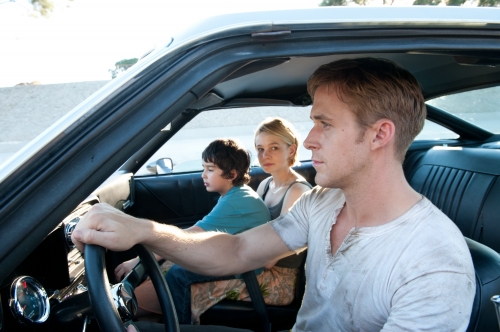
I don't know whether this noirish car chase movie should be taken seriously. There's much in it that has got to be tongue in cheek, although it's hard to tell whether director Nicolas Winding Refn and screenwriter Hossein Amini are dead serious or joking. Either way, if we can't be sure, something's not working. A.O. Scott, in his review, called it "conventional and timid". I would say that it is artificial and antiseptic, despite its ridiculously cartoonish bloodbaths. It feels like a extended music video, polished to within an inch of its life, full of scenes in slow motion with a bubbly 80's soundtrack. 
Drive is the story of Driver, (Ryan Gosling) a man with no name, few words, and an inexhaustible reservoir of brutal anger, who does Hollywood stunts for a living and helps with the occasional heist. As much as I love Ryan Gosling, and as good as he can be, he's no Steve McQueen. He's no Clint Eastwood. He's too fresh faced and too expressive to fit the lonely, silent action hero type. At his age, guys like McQueen and Eastwood already looked like they had a lot of mileage. Gosling has good moments in this movie but he is not helped by a director who has no clue about what to do with characters and actors. I can buy the silent dangerous type who decides to redeem himself by falling in love with the single mother of a sweet kid. It's been done to death. But as played by Carey Mulligan, this woman is so beatific you almost expect her to sprout a halo. Turns out her husband (Oscar Isaac) is in jail. So Mother Theresa here seems to have a penchant for troublesome men. Problem is, there is nothing in her character that remotely indicates how or why. It would help if she wasn't this flat fantasy of female benevolence. Give her some sexy, some neurosis, some sense of fear, some danger. I find saintly mothers of cute kids as offensive a female stereotype as whores with hearts of gold, bridezillas and bitchy career women.
Gosling and Mulligan have some chemistry, but Refn deliberately misses the one moment where sparks could fly.  Gosling is driving her around, and she chastely puts her hand on his. We never see their faces. There is no sex at all, except for a kiss in an elevator, which is the best scene in the movie and also the most ridiculously grotesque. These choices may be Refn's commentary about the puritanical pornography of violence in America, but this still does not help us care about the characters.
Drive looks great, sounds great and performs the requisite car chases with cool efficiency, but watching this movie feels like watching the chassis of a very shiny sports car. There is little there, and what little there is, is either too dispassionate, or very discomfiting. I was struck by the fact that if you do the math, in the social-racial arithmetic of this movie, the three "good" characters are white, (Gosling, Mulligan and Bryan Cranston as Gosling's mentor), she is married to a no good Latino, and the meanies happen to be two absolutely horrible Jews (Albert Brooks and Ron Perlman, both expertly chewing the scenery). Feeble lines of dialogue attempt to justify the motivations behind these two execrable people. In the case of Nino, played by Perlman with great panache, he's a wannabe Italian mafioso who bears a grudge because the guidos call him a kike; and Brooks is excellent as a businesslike crook who owns a collection of exquisite blades and knives with which he bleeds people (I assume mostly gentiles) to death. Those he likes, he bleeds more gently, and this is supposed to make him human. I was faintly reminded of medieval blood libels, but perhaps, being of the Jewish persuasion, I'm too sensitive. Still, I can't help but think how these kinds of toxic representations keep bubbling up in the collective unconscious. I'm not saying that there cannot be Jewish gangsters or evil characters in movies, as there are in life, but in a movie with only six characters, two awful Jews is a bit dispiriting, to say the least.
There is a difference between nihilism and empty cool. This movie looks like it wants to be some sort of an existential meditation on the vicious corruption of money, but it is too stylish, too controlled and too basic to really dig for the dirt. The violence is so over the top as to be risible. The characters don't have credible lives. Even if steeped in all the conventions of the genre, which can be quite fun, Drive is pretty lifeless.


Jan 23, 2011

Blue Valentine


According to Richard Brody from The New Yorker:
Blue Valentine is a blend of a TV commercial and an acting class; it's a portentous and monotonous slog through deterministically scripted plot points, overcalculated performances, and artificial poignancy — an utter non-experience.

Funny, because Brody usually waxes poetic about the most pretentious, portentous and monotonous films himself. He gives ecstatic reviews to obscure, irrelevant oddities. So why the nastiness towards a good, honest movie like Blue Valentine? This is as ineffable as his pedantic taste. Read Anthony Lane's review instead (after you are finished with this one, of course). He nails it.

There is nothing in Blue Valentine that is remotely similar to a TV commercial (we wish) and yes, it is an acting class, but in the best sense of the word: with two brave actors (Michelle Williams and Ryan Gosling) who put themselves on the line in order to create absolutely believable, endlessly complicated, flesh and blood characters. The depth of character and painful intimacy of Blue Valentine you rarely see in American movies. The one influence that comes to mind is John Cassavettes.
This film by Derek Cianfrance is a very well written, beautifully crafted story of a real romance: a couple meets, falls in love, tries to build a life together and fails miserably.
It is as life: bittersweet, predictable yet full of surprises, sad, tough, complicated and lovely.  Except perhaps for one harrowing family dinner scene that seems a bit of a cliché, you will not find in Blue Valentine the usual stereotypes, not those of Hollywood nor of American independent films. Every aspect of character that could be one dimensional is offset by real shading and complexity, so instead of types (artsy hipster guy meets hardworking small town girl) you have real characters.
As played by Ryan Gosling, Dean is an eccentric with a charming but immature romantic streak who is content with doing odd jobs and being an oddball. A potential creative type with zero ambition, he is a good dad and a loving husband but he is also a pill -- a man who deploys charm as a deadly weapon until he wears people down, with whom it is impossible, as Cindy points out, to have an adult conversation. There is a very sharp edge beneath his sweet nature. At first one thinks Cindy is a plain, relatively shy, no nonsense woman, but as you get to know her you find deep undercurrents of toughness and a sadomasochistic streak. She is as emotionally repressed and passive as he is defensive. Good luck trying to make this work out.
As we see the story unfold from a marriage that is not working anymore, to courtship, to before the courtship, to the beginning of the relationship, we learn who they are and why they act the way they do. There is perhaps one sentence of exposition in the entire film, and it is so well deployed towards the end of the film, that it deepens our understanding of Dean's actions and the entire arc of his character, though it happens at the beginning of their courtship. Because of the time structure, there are many rich layers of meaning to be mined from this movie. A conversation about a former boyfriend between Cindy and Dean gains a whole different meaning once the movie goes back in time. The structure goes back and forth, but it is always clear where the relationship is. This movie should get the Oscar for best original screenplay.
The one false time note is that Dean loses his hair and starts wearing glasses, looking 20 years older, and so one thinks that the movie spans a longer period and then you realize that it's only been 4 or 5 years since they met. Perhaps Cianfrance and Gosling wanted to show the toll of a life of diminishing returns and steady drinking, but it's the only thing in the movie that seems arbitrary and artificial. Williams' physical transformation is much more successful. Just by putting her hair up in a bun and giving it the remnants of a bad dye job, gaining a little weight, and shooting her from less flattering angles, she goes from being a sprightly, beautiful girl to a harried, exhausted working mom (put anybody in a nurse's uniform and watch them age instantly). Williams is both sexy gorgeous and plain-looking and although her role is not as flashy as Gosling's, I think it is the tougher part, for she is much more of a mystery and a loose cannon, albeit one who bottles everything up. Williams has a harder time making Cindy into a psychologically consistent character. But perhaps the point of Cindy is that she isn't. Dean definitely is. He marches to the beat of his own drummer but it is always perfectly clear what that is. Both of them are outstanding.
Had the story been told chronologically, the movie could have slid into tawdry melodrama, but because it jumps around in time, it allows the audience to discover the characters instead of obsessing with what is going to happen. It's like when you meet someone new, a friend, colleague or partner.  Many times your first impression (you think you nailed them) is going to disappear under the force of their real personality as it emerges through time, until you barely recognize whatever it is you saw in them at the beginning.
A film that allows the audience to get to know its characters so deeply and intimately is nothing short of miraculous. What this clear eyed, deeply poignant but unsentimental movie breaks to the audience, not too gently, is that love is going to take a thorough thrashing at the hands of real life. So grow a pair because if you love, you are going to need one.

Feb 19, 2010

Manohla Vs. A.O.

Roman Polanski and Martin Scorsese have 2 movies out this week. We are seeing both. I'm PUMPED!
The critics in the NYT seem to think one is good and the other one isn't. This caused a fierce comment thread on my facebook page in which somehow Yoko Ono, Hitler and Coldplay made an appearance (as in who of the three is most annoying). However, the passionate argument was not about Scorsese and Polanski, which everyone involved adores. It was about the film critics of the New York Times, who provoke violent feelings among readers.
I usually do not review other reviewers (it's not good form), but here goes:
We all love Anthony Lane, although sometimes I wish he'd just say whether he likes a movie or not. Commit, dammit.
I happen to like Manohla Dargis a lot. She can be ornery and venomous, which is sorely needed in the soporific, sclerotic Arts section of the Times. Also, how could you possibly hate someone who spells Manola with an h in the middle?
I like her more than A.O. Scott, whose taste seems to be warped by the amount of trash he sees. I will never forgive him the glowing review he gave to Invictus, the worst movie I have seen in a long time.
The one thing that drives me crazy about both of them is that they fill up space by revealing entire plots with nary a spoiler alert, which is why most of the time, if I haven't seen the movie, I only read the first and the last sentence of their reviews. This gives me an idea of whether the review is positive or not and I don't have to know that the butler did it.
I once sent hate mail to Janet Maslin. I threatened to send her a Molotov cocktail if she didn't cease giving away all the plots and all the jokes. Several years later, she no longer reviewed films. I'm sure I was not the only one complaining. She reeked.
And I'm proud to say I once got hate mail myself, when I was a reviewer for La Jornada Semanal, back in Mexico. The fact that a reader was so incensed by my bad review of Batman (the first one) that he sat down to compose a bitter letter of complaint, made my day, my month, my year.
I love that movies unleash passion in people.

Nov 16, 2009

If These Are The Most Important Films of the Decade...

... We Are In Trouble.

I used to like A.O Scott until he wrote this silly, pompous screed about what he thinks are the most influential movies of the decade.
For one, I think it's too soon. We still have 2010 coming down the pike.
Secondly, how stupefyingly conventional. How horrifyingly bourgeois. It feels like really lazy work by someone who lives in a Norman Rockwell painting and shops at Wal-Mart and reads Reader's Digest.

Scott divides his magisterial canon in two, the most influential commercial movies (meaning dreck of pop cultural importance, movies that for the most part made oodles of money) and movies of quality. I think he is out to lunch on both counts.
First, the dreck of importance:

• Zodiac (David Fincher). I don't get it. Long, plodding, mostly unexciting and literally yellow. So it uses digital effects that you can't actually see. So what? This movie was ignored by everyone for a reason.

• The Passion of The Christ (Mel Gibson). Of course I didn't see it. Not interested in religious porn. It's on the list because according to Scott, it showed that religious movies could have a mass audience, but I don't see many more instances of this trend. The Annunciation? The Burning Bush?  The Mountain Goes to Mohammad? It ain't happening. The movie was big because it was gruesome and made by a movie star crackpot.

Farenheit 9/11 (Michael Moore). Peut etre. The $100 million grossing documentary.
No great shakes artistically speaking. However, it's true that Moore's success helped bring the documentary genre back to life; or rather, documentaries can now make some loose change.

The Lord of The Rings (Peter Jackson). This trilogy, writes Scott, "was a milestone in the geek ascendancy". Well, as Sam Goldwyn used to say, include me out.
Despite the presence of Viggo Mortensen, I couldn't be bothered. This is strictly my personal taste. I despise Middle Earth fantasies (and fantasies in general). So we have Peter Jackson to thank for horrid hybrids like the Harry Potters and the upcoming Avatar and 2012 and all this bloated crap. If the influences are noxious, what is there to celebrate?

Funny Ha Ha (Andrew Bujalski). Don't get me started on Mumblecore.
Mostly irrelevant and for good reason.

The 40 Year Old Virgin (Judd Apatow). I totally agree. A sweet and riotous romantic comedy, equally appealing to males and females, plus, there is a new adjective: Apatovian.

Crouching Tiger Hidden Dragon (Ang Lee). A stunningly beautiful movie about nothing much. What really is the transcendence of this film? "China’s emergence as a pop-culture superpower". Puhleeze.
"An example of the crossover potential of local genres in a global marketplace", I think it's the opposite, a foreign movie financed, calculated, written and conceived to appeal to our local tastes (which is why it sucked. It's Star Wars in Chinese). I don't know if Scott is being naive or he just likes the sound of his own bombast.

Amores Perros (Alejandro González Iñárritu).  We have this movie to thank for ballbreaking puzzle movies like Syriana, Babel and Crash. Granted, it's a film of great moxie and power, but it spawned an obnoxious genre of preachy plot pyrotechnics and underwritten characters.

Diary of a Mad Black Woman. I haven't seen any of Tyler Perry's movies so I really can't opine. But they seem to be circumscribed to the African American audience, unlike some of the work of Spike Lee, which was intended to cross over and make a fuss, which it did.
"Perry is, with Oprah Winfrey and Barack Obama, one face of a new black-power structure that has become part of the American establishment". "A new black power structure"? Really? This sounds like grandiose bullshit to me, but I bet the token inclusion of Latino, Asian and Black movies must make Scott feel like a p.c. boy scout.

Shrek. The more I read this list, the more offensive I find it. Of all the animated movies that have swarmed us since the advent of Pixar, why choose the one that took a fantastic character from a fantastic writer and turned it into a vulgar, formulaic franchise? Okay, I get it now. This should not be the list of the most influential movies of the decade, but of the movies that easily become merchandise.

Movies of Quality in Podunk

Let's move to the equally painful movies of quality, according to A.O Scott:

• Wall-E (Andrew Stanton). Excellent in parts, but every single Pixar movie is the same formula. This one just happens to take place in a dumpster.

• Yiyi (Edward Yang) and The World (Jia Zangke). Have not seen Yiyi, and The World is a wonderful film, like all of Jia's movies. But I would choose Still Life, which is much more powerful.

• Million Dollar Baby and Letters From Iwo Jima (Clint Eastwood).
"Late masterpieces from the last great classical American filmmaker". Wow. Cue the  trumpets. The first one is unconscionable here. A female Rocky, maudlin, boring, and with Morgan Freeman sweeping the floor of a gym, playing the good negro.
I can't abide Clint Eastwood and his solemn hackery. I never believe anything that happens in his movies. It's all fake sentiment.
Letters from Iwo Jima is the best thing Eastwood has ever done, which in my book is not saying much, but I admit it impressed me.

Great American quality films of this decade?  
A History of Violence, There Will be Blood, Michael Clayton, The Departed, The Wrestler, The 40 Year Old Virgin, Borat, The Hurt Locker, Juno, Jarhead, Little Miss Sunshine, The Darjeeling Limited, Rescue Dawn, 3:10 to Yuma, Children of Men, Eastern Promises, We Own The Night, Catch Me If You Can, O Brother Where Art Thou, even No Country for Old Men, which I dislike.  

• 4 months, 3 weeks and 2 days (Cristian Mungiu), and L'Enfant (The Fréres Dardenne). This is like pairing Velveeta with foie gras. The Romanian movie is an exercise in crass audience manipulation, stacking the deck to extreme, exploitative levels.  L'Enfant is truly a masterpiece of cinema; almost literary in its moral complexity. How you can put them together is beyond me.

Great foreign films of the last decade?  
The ClassLet the Right One InCacheThe White RibbonDownfall, Hunger, Il Divo, Read my Lips (or anything by Jacques Audiard)anything by Lucrecia Martel, anything by Joon-Ho Bong, the director of The Host and Mother, Persepolis, anything by Miyazaki, Secret Sunshine, the new Israeli cinema (Beaufort, Or, Lebanon, Waltz with Bashir, Jellyfish, The Band's Visit), Ten by Abbas Kiarostami, etc.

• Pan's Labyrinth (Guillermo del Toro) and Where The Wild Things Are (Spike Jonze).
WTWTA is a thing of beauty. Smart, poignant and sophisticated. The other one is not only cheesy, but it banalizes the Spanish Civil War.

• I didn't see either of the documentaries, which I'm sure are great.

• The Best of Youth (Marco Tulio Giordano) is a TV mini series that tries to cram all of Italy's postwar history in six hours. It's spellbinding yet a little hokey by the end.

• Eternal Sunshine of the Spotless Mind (Michel Gondry) and Talk To Her (Pedro Almodóvar). I would have said Adaptation (Charlie Kaufman, really) and Volver, which is far superior to Talk To Her, in my book. These two movies have nothing to do with each other, except perhaps in the overly simplistic concept behind this list, that both use surreal sequences.

• The 25th Hour and When the Levees Broke (Spike Lee). The first one is the best Spike Lee has done in years, except for Inside Man, which is better. The second one is incredibly powerful, and deserved to be screened in theaters, not only on HBO.

• Gosford Park (Robert Altman) and Moolaade (Ousmane Sembène): R.I.P."
Moolade, I haven't seen. Gosford Park, no. It's fine but it is nothing special and not among the best of Robert Altman's films.

Really this list is like a mayo sandwich on white bread. It feels like it was written by the film critic of The Podunk Times. It is not the job of a critic to appease and conform to the middle-lowbrow. It is to shed attention on the extraordinary (high and low) and to enlighten and encourage the public to seek and enjoy and appreciate artistic value in film.

May 4, 2008

Let Us Decamp For Better Screens Elsewhere

Today in the Movies section of the New York Times, back to back articles by Manohla Dargis and A. O Scott about the lack of real women and adult men in Hollywood films. The Dargis article really hits the point. It is a fucking disgrace that Hollywood considers women a subpar product. And most of what it turns out is insulting to women. And as Manohla points out, who cares if there are more women executives in Hollywood now that ever? It's obviously not helping.
I am, as we speak, intending to be a female filmmaker. I see there are a lot of Women's film festivals. And I resent that. I don't want to be confined to a niche. Women should not be a niche. Women directors, writers, actors, should be part of the mainstream, not have their own little disadvantaged corner where to play. After all, who else fills half the seats at all those Judd Apatow's movies if not girlfriends, wives and sisters?
In other film industries in the world, particularly in Europe, this does not happen. There are more films that, regardless of the gender of its stars, are more mature, and less noxious than what passes for film here.

Dec 14, 2007

Review of a Movie that I May See But That I Have Strong Reservations About

Am I the only person in the universe that finds the sight of a computer generated destroyed Brooklyn bridge obscene? Some movie critics seem to think that is it enchanting to see New York City utterly destroyed, and they live here, by the way. I saw the preview for I Am Legend, the new Will Smith blockbuster, and I gasped in terror at the sight of a broken Brooklyn bridge.
First thing that came to mind was: don't be giving people ideas!
Didn't we just have a real Al Qaeda generated disaster 7 years ago that looked like something out of Godzilla? Excuse me, but I don't like the lines between reality and the movies to be that blurred. Luckily, there are flesh eating zombies in this movie, so we can rest assured that blowing up our bridges is an activity that remains safely ensconced in the realm of fantasy. As if.
Even if the movie is smart and entertaining, it is obscene to spend so much money fantastically destroying NY (they also destroyed traffic here for weeks while shooting).
I will admit that every New Yorker has a fantasy of having the city all to ourselves. In his review, A.O Scott describes some scenes where Smith fishes in the Temple of Dendur and golfs in the West Side Highway. Me, I'd raid Bergdorf's first. Then Saks, Barney's, Jeffrey, the Prada store, Sephora, you get the idea. Do I care that I am the only woman left on the face of Earth? Not after that kind of shopping, I don't. Only men could have a post apocalyptic New York scenario and not think of free shopping. DUH!
In fact, the week after 9/11, here downtown, New Yorkers took out their rollerblades and bicycles and realized their dream come true of having the streets to themselves. I can see that, but still, these kinds of spectacles are special effects porn, and not of the healthy kind.

Nov 9, 2007

No Country for Old Reviewers Who Give Away the Plots

I very much want to see the new Coen Brothers movie No Country for Old Men, but already Anthony Lane was kind enough to describe in writing the entire opening scene. Hell, A.O. Scott put the gist of the plot on the byline of his review! Is it possible to go to a movie without knowing absolutely everything that is going to happen? I know I sound like a broken record, or better yet, an escapee from the psycho ward, but it drives me crazy that people cannot write a review without giving away the plot. We lose the element of surprise. And those of us who love movies, well, we live for the element of surprise! I don't want to know what happens. I want to know if you liked it or not and why. Can you write about the movie in general terms without going into plot specifics? Is this too much to ask? Should I be restrained with a straitjacket?
Usually reviewers leave the filler for the middle, which, when confronted with nothing interesting to say, they just tell you everything that happens in the story. In order to avoid the spoilers, I simply read the first and the last sentence and I get a pretty good idea of whether they liked it or not.
Now Anthony Lane has ruined it for me. He's ruined the beginning for me. I'm still going to see the movie, but I am not reading the reviews. And neither should you. (Unless you read mine, coming soon to this here page).

Jun 14, 2007

Janet Maslin: Spoiler Alert

An ancient hatred of mine is back!
Lo and behold, the nefarious Janet Maslin, erstwhile film critic of the New York Times, is at it again.
She used to tell all the jokes in her reviews of funny movies. She wouldn't leave one joke out of the page, if she could help it. Thus, she basically ruined every comedy for the people who read her. You'd go to the movie only to realize you had already heard all the jokes. Mirth-killer. Party-pooper. Idiot. She put me in a homicidal mood, I have to confess. On a molotov cocktail throwing, sharpshooting, arson provoking, guillotine wielding, rope twisting around the neck, kind of mood.
Well, apparently, time has not changed anything. They still, incomprehensibly, employ her at the Times, where she is still in charge of telling other people's jokes. Today, she tells all the jokes in some old Woody Allen books and in some new Woody Allen books. So if you are in the mind of buying such books, you have been warned, do not read her review.

Speaking of Woody Allen, I don't find him funny anymore. Not even if Janet Maslin tells the jokes. I find him actually excruciatingly unfunny. I was once one of his biggest fans, but lately, let's say in the last 10 years, I can't stand his movies and I can't stand his smug little pieces in The New Yorker.
He's one of those artists who has decided he's not going to live in the same world with the rest of us (like Stanley Kubrick, another neurotic Jew, at the end of his life). Our world is irrelevant to Woody Allen, and so his world seems irrelevant to me. It kind of tries to look like our world, but it really isn't because there isn't one shred of reality in it. His movies all take place in a fake New York, (or lately, in a fake Europe) all populated by women who are either horrendously shrewish or cloyingly ditzy or cartoonishly sexual, but none of them realistic or sympathetic. The last movie of his I saw was that thing about the tennis player and I thought it was contrived and airless, as if conceived inside a can of peas.